Phoenix’s divergence suggests more resilient local fundamentals—migration, job growth, and supply constraints. Nationally, median home prices were down ~0.6 % and pending sales were collapsing ~31 %, indicating broader weakness. The relative strength tempers downside risk in Phoenix-centric holdings. From tax revenue projections, this resilience helps sustain municipal forecasts. Policymakers may point to this in justifying infrastructure or housing policy. For value stability, the local cushion provides greater breathing room than many other U.S. markets.

The luxury market in Phoenix saw a 17% year‑over‑year increase in luxury home listings in Q1 2025, followed by another 15% gain in Q2. For wealth managers, this expansion signals differentiated asset allocation opportunities in high‑end segments, albeit with longer average holding periods. The stable zoning regime and absence of rate hikes have muted tax volatility, while ongoing city parcel rezoning efforts are expanding building opportunity zones. From a sustainability lens, new luxury projects increasingly request green‑certification incentives, bolstering long‑run appeal in upscale resale markets. With this elevated listings baseline, pricing resilience remains intact, supporting future capital preservation.
The $7 billion Halo Vista development in Phoenix, anchored by TSMC manufacturing, will span 30 million sq ft across industrial, office, educational, residential and hospitality uses. Initiated through state land auction and led by Mack Real Estate Group and McCourt Partners, the project is expected to support 10,000 permanent jobs, plus up to 80,000 additional jobs regionally.
Commercial real estate portfolios tied to this megaproject anticipate diverse revenue inflows and asset class diversification. Municipal tax revenues are poised to rise significantly. The development benefits from supportive legislative positioning around critical‑minerals manufacturing and mixed‑use zoning. Infrastructure resilience and mixed‑use density add long‑term capital preservation, while integrated planning supports smart‑city sustainability with walkable, transit‑oriented design.
Taiwan Semiconductor Manufacturing Company announced in July 2025 that it is accelerating production at the second of six fabrication plants planned in North Phoenix, after achieving $30 billion in Q2 2025 revenue, up 44 percent year‑over‑year. Once complete, Arizona will produce 30 percent of TSMC’s most advanced chips. The investment to date totals $165 billion across the U.S., including $100 billion for Arizona specifically.
Institutional portfolios tied to semiconductor supply benefit from increased employment and production density, with local property tax bases supported. Regulatory context includes federal incentives and state economic development programs. The project enhances value stability through high‑barrier‑to‑entry industrial assets and aligns with smart‑manufacturing and sustainability criteria via state‑of‑the‑art fab facilities.
In June 2025 Governor Katie Hobbs signed legislation approving up to $500 million in public funds and $250 million in private investment to upgrade downtown Phoenix’s Chase Field, including roof and HVAC systems improvements. Attendance has reached an average of 31,420 per game, the highest in two decades. The deal authorizes sales‑tax revenue flows over 30 years and prohibits use of funds for luxury upgrades, reflecting legislative controls on subsidies.
From a wealth‑management perspective, the enhanced venue stabilizes downtown property appeal, supports local sales‑tax streams, and reduces relocation risk. Tax considerations include dedicated sales‑tax revenue streams rather than general funds. Infrastructure enhancements drive long‑term value retention, while cooling upgrades align with heat‑resilience and energy‑efficiency goals.
The $70M expansion of Show Low’s Summit Healthcare Regional Medical Center, adding 60 beds and specialty care, will open in late 2024. Healthcare facilities are viewed as stable assets in family office strategies. Local property taxes benefit, and the facility is built for low water and energy consumption.
New single-family subdivision permits in Mesa increased 18% year-to-date, per Maricopa County’s GIS and Mesa’s P&D Services portal. This surge supports regional housing supply goals. Wealth managers may assess how suburban migration impacts rental yields. Tax assessments for these new tracts will follow standard county protocols. Zoning updates in 2025 facilitate cluster housing options. Future-proofing is addressed via mandatory fiber-to-the-home and smart utility metering.
Recent permit activity in Mesa, Gilbert, Queen Creek, and Buckeye shows robust forward momentum, with the U.S. Census reporting residential permit issuances up 7% year-over-year in these submarkets. Developers are responding to continued net migration and employment growth, particularly in advanced manufacturing and tech. For high-net-worth investors, these construction corridors offer opportunity for long-term land banking and equity appreciation, particularly in tax-advantaged opportunity zones. Local governments have updated infrastructure and water management regulations to accommodate this pace, and smart-growth overlays are guiding sustainable expansion. Long-term, these areas are rated highly for value stability, given their young median housing stock and high build-out runway, reducing overvaluation risks compared to infill markets.


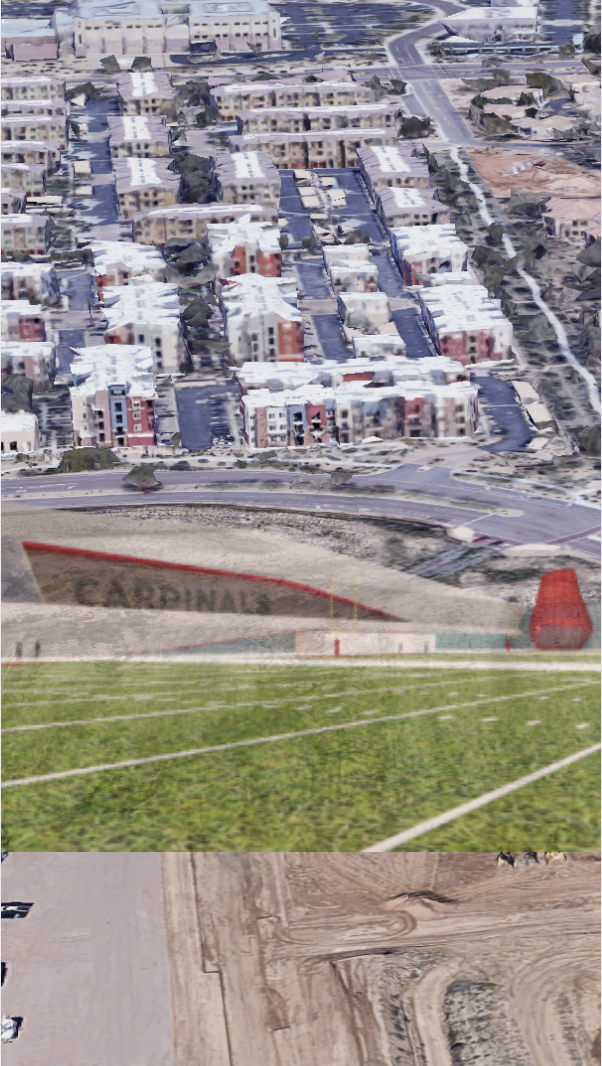 Arizona Cardinals’ $136 Million “Headquarters Alley” Project: How a 217-Acre Deal Will Redefine North Phoenix by 2028
 Public Safety as an Asset Class: The New Scottsdale AdvantageIn today’s Smart City economy, safety isn’t simply about peace of mind—it’s becoming a measurable, marketable asset class. Scottsdale is proving that public safety can be engineered into the fabric of
Nice to meet you! I’m Katrina Golikova, and I believe you landed here for a reason.
I help my clients to reach their real estate goals through thriving creative solutions and love to share my knowledge.