On June 24, 2025, Maricopa County Board of Supervisors adopted a zoning amendment streamlining approvals for mixed-use and high-density multifamily developments within transit corridors, notably along Central Phoenix, Tempe, and Mesa. The regulatory change reduces conditional use permit timelines by up to 40 days and introduces density bonuses for incorporating renewable energy or affordable units. This framework increases certainty for institutional portfolios and supports urban-infill wealth management strategies. Property tax implications center on the shift from commercial to higher-density residential assessments, which can affect long-term cash flow models. Future-proof development is further supported by new requirements for gigabit-ready digital infrastructure in all new multifamily projects.

Queen Creek and the surrounding San Tan Valley area continue to lead Pinal County in residential permit volume, with over 1,200 new home starts reported in Q1 2025. Masterplanned communities like Harvest and Barney Farms are noted for high absorption rates among young professionals and retirees alike. Pinal County’s tax environment remains highly competitive, often featuring lower millage rates compared to neighboring Maricopa County. Legislative updates regarding "Assured Water Supply" have reinforced developer confidence in these growth corridors. Smart-city tech, including fiber-to-the-home and integrated community apps, is becoming standard in new phases.
Peoria’s Vistancia community remains a focal point for luxury and family-oriented buyers, with recent land acquisitions by top-tier builders indicating another 500+ units in the development pipeline. The city of Peoria’s updated General Plan emphasizes "smart growth" corridors, integrating masterplanned aesthetics with tech-enabled public safety and transit. Median home prices in North Peoria have stabilized near $620,000 (Cromford Report), supported by Arizona’s favorable primary residence property tax regime. Regulatory oversight focuses on maintaining "open space" ratios and ensuring drought-resilient landscaping, which preserves long-term community character and asset value.
The Arizona Commerce Authority confirmed $7.2 billion in new manufacturing facility investments statewide in 2025 YTD, led by semiconductor and battery production plants in Greater Phoenix. These projects boost industrial land values and broaden tax bases. Local zoning updates are fast-tracking entitlements for related suppliers. Green factory certifications ensure compliance with ESG mandates, attracting global institutional capital.
According to the U.S. Census Building Permits Survey, Casa Grande and Maricopa City issued a combined 1,478 residential permits in Q1 2025, reflecting a 12.7% year-over-year growth rate. This outpaces Phoenix’s 3.8% permit growth over the same period. Population projections from MAG show Casa Grande expanding by 41% over the next 20 years. These growth indicators align with the region’s emerging-market status, ideal for early-phase real asset deployment. From a tax strategy perspective, accelerated depreciation on new-build rentals in Opportunity Zones across Pinal County enhances investor appeal. State-level reforms (e.g., HB2110) further enable mixed-use developments. Infrastructure plans include broadband expansions and water-resilience upgrades funded under the Arizona Future Bond.
As of May 2025, Tucson’s multifamily vacancy rate has decreased to 4.6%, while effective rents have risen by 7.3% year-over-year, according to CoStar. Nearly 2,800 new units are under construction, with leasing velocity highest near the University of Arizona and the Kino Parkway corridor. For investors, Tucson’s economic diversity and stable employment in healthcare, education, and aerospace industries create long-range rent resilience. Tax-aligned incentives, such as Pima County’s abatement on qualified workforce housing projects, increase after-tax returns. Sustainability features, including water-recapture systems and green roofs on new builds, are promoted under the city’s Climate Action and Adaptation Plan, reinforcing Tucson’s eco-focused urban branding.
Arizona cities, including Phoenix, Tempe, and Peoria, are advancing smart-city initiatives with real-time energy, water, and traffic management. For example, Tempe’s IoT traffic systems have reduced average commute times by 9%, and Phoenix’s green building incentives have driven a 15% increase in LEED-certified projects since 2023. Wealth managers note these programs increase desirability and value retention. Municipal tax credits for energy efficiency and solar installation further enhance after-tax returns. Current legislation encourages cities to integrate climate resilience metrics into zoning, while planning commissions are fast-tracking adaptive reuse and green infrastructure projects.
The Tucson metropolitan area is witnessing consistent growth in its masterplanned sectors, particularly in the Southeast (Vail/Rita Ranch) and Northwest (Oro Valley/Marana) corridors. According to recent figures from the Arizona Commerce Authority and Yardi Matrix, Tucson’s affordability relative to Phoenix continues to attract both retirees and remote workers. Wealth management perspectives emphasize the stability provided by Tucson’s diverse economic base and its favorable property tax environment. Regulatory updates in Pima County are encouraging more sustainable development practices, including drought-tolerant landscaping and energy-efficient building codes. Smart-city pilot programs in Tucson, such as smart street lighting and improved digital services, are adding to the appeal of its newer masterplanned environments.


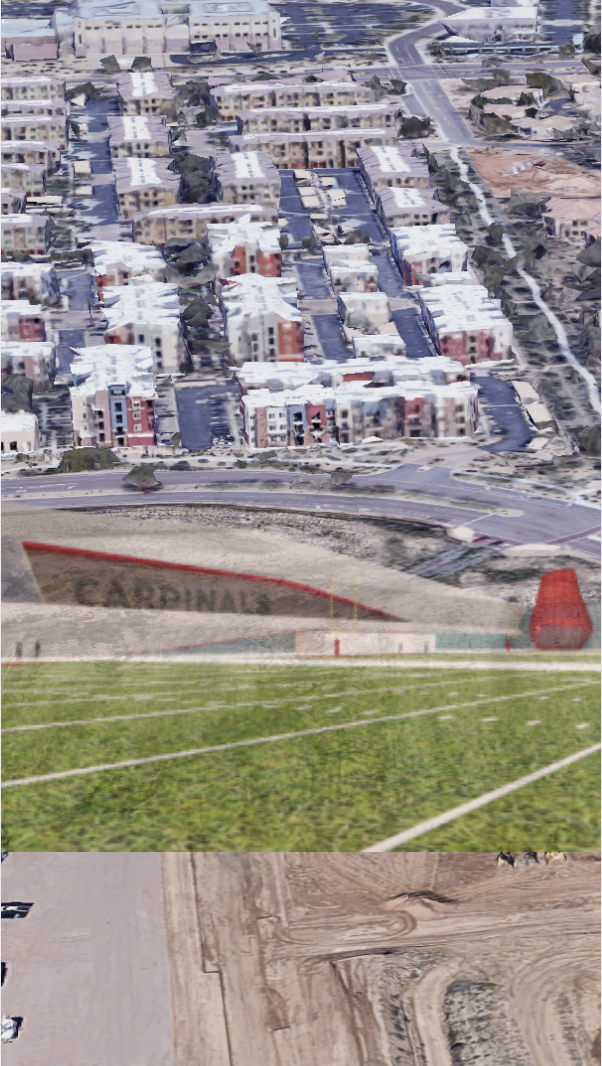 Arizona Cardinals’ $136 Million “Headquarters Alley” Project: How a 217-Acre Deal Will Redefine North Phoenix by 2028
 Public Safety as an Asset Class: The New Scottsdale AdvantageIn today’s Smart City economy, safety isn’t simply about peace of mind—it’s becoming a measurable, marketable asset class. Scottsdale is proving that public safety can be engineered into the fabric of
Nice to meet you! I’m Katrina Golikova, and I believe you landed here for a reason.
I help my clients to reach their real estate goals through thriving creative solutions and love to share my knowledge.