On June 24, 2025, Maricopa County Board of Supervisors adopted a zoning amendment streamlining approvals for mixed-use and high-density multifamily developments within transit corridors, notably along Central Phoenix, Tempe, and Mesa. The regulatory change reduces conditional use permit timelines by up to 40 days and introduces density bonuses for incorporating renewable energy or affordable units. This framework increases certainty for institutional portfolios and supports urban-infill wealth management strategies. Property tax implications center on the shift from commercial to higher-density residential assessments, which can affect long-term cash flow models. Future-proof development is further supported by new requirements for gigabit-ready digital infrastructure in all new multifamily projects.

Tempe has retained a rental occupancy rate of 94.2% despite rising Class A multifamily deliveries, per CoStar July 2025 data. The median effective rent reached $1,885, up 6.3% YoY, supported by ASU-adjacent demand and tech-sector employment nodes. Institutional investors will note Tempe's zoning overlays allowing flexible mixed-use densities along Mill Avenue and Apache Blvd. Legislatively, the city is exempt from recent state-level preemptions on form-based code use. Tempe’s smart-city infrastructure, including adaptive traffic management and solar-integrated municipal garages, underpins its innovation-centric livability index.
Flagstaff has approved a $120M eco-resort featuring 150 luxury cabins and integrated wellness facilities, aimed at high-end climate-refugee travelers. This asset class offers high-yield potential for specialized funds. Arizona’s tourism tax structure remains advantageous. Stringent environmental zoning requires zero-waste operations and forest health mitigation, reinforcing long-term ecological and financial sustainability.
As of Q2 2025, Tucson’s average multifamily rent climbed to $1,340/month, up 6% year-over-year (Yardi Matrix), despite 2,100 new units delivered since January. This signals robust demand and ongoing institutional interest in Southern Arizona assets. Favorable municipal tax policies and zoning for workforce housing are driving development. New buildings are meeting LEED and ENERGY STAR standards, ensuring future-proof value.
Institutional investors accounted for just 7.5% of all single-family home purchases across metro Phoenix in Q1 2025, down from 8.2% in Q1 2024, continuing a two-year trend of retreat. This decline places Phoenix below the Arizona statewide institutional buying average of 6.9%, according to CoreLogic data cited by Axios. Analysts point to cooling rental growth, high home prices, and rising financing costs as the primary deterrents. For wealth management portfolios, this shift opens local markets to individual buyers and boutique investment groups, while signaling a slowdown in large-scale yield-seeking capital inflows. Tax implications may emerge as local municipalities shift attention to small-owner tax base strategies. Legislatively, the pullback reduces pressure on regulatory caps that had been under informal consideration. From a stability lens, reduced institutional dominance supports more organic pricing dynamics. The trend also aligns with long-term smart-city initiatives favoring diversified ownership, community resilience, and less speculative neighborhood structuring.
Pinal County’s Board voted February 5, 2025 to cancel the in-progress Development Services Code Update draft dated January 6, 2025, signaling a reset before further revisions. In September 2025, AZ Business reported Vermaland’s plan for a $33 billion data-center industrial park in Pinal County, positioning the Phoenix–Tucson corridor for hyperscale investment. Wealth managers should consider county-level policy timing when underwriting. Taxes and impact fees could be substantial as infrastructure scales. Regulatory context will involve water, power, and transmission approvals. Value stability in industrial land may bifurcate by utility capacity. Smart-city dimensions include grid planning, thermal management, and water reuse.
In August 2025, Buckeye’s median sale price was $399,999 (-1.1% YoY) with 83 median days on market and 214 sales. Buckeye’s 85326 printed $392,490 (+1.0% YoY) with 67 days on market, while 85396 posted $445,150 (-3.1% YoY) with 86 days. Goodyear’s median was $465,990 (-0.85% YoY) with 79 days on market and 165 sales. In 85338, the median was $453,000 (+0.4% YoY) with 69 days and 396 sales. Nationally and in Phoenix, sellers now outnumber buyers by roughly 500,000, tilting the market toward purchasers. Arizona’s for-sale inventory reached about 47,203 in July 2025, up ~23% year over year, indicating broader choice. Freeway access via the South Mountain corridor continues to support commuting patterns and industrial tie-ins. Water policy remains pivotal: Arizona limited new groundwater-only subdivisions in the Phoenix AMA in 2023, and an Ag-to-Urban credit pathway becomes effective September 26, 2025. Wealth-management views focus on relative value versus northeast Valley luxury and on basis preservation when trading into newer builds. Property-tax calendars help time acquisition and cash calls; Maricopa’s halves are due October 1 and March 1. Builders and sellers are offering more concessions in 2025, supporting buy-down and cap-rate math. Legislative momentum on water credits (SB1611) and ongoing AMA rule work add clarity for entitlements. Value stability correlates with the West Valley’s logistics pipeline, including a planned multi-billion-impact park. Smart-city connectivity is expanding as Goodyear adds 35+ route miles of dark fiber aimed at hyperscale demand by year-end 2025.
As of July 2025, SB1181 (streamlining multifamily ADU conversions) and HB2119 (default ADU approval on single-family lots) have passed into law. These laws pre-empt local restrictions and apply statewide, directly impacting cities such as Chandler, Scottsdale, and Tempe with historic overlay zones. This move is expected to increase small-unit inventory and promote intergenerational living models. Tax assessors are preparing new valuation templates for ADU inclusion, while HOAs must now provide explicit exemption clauses. For investors and estate planners, the policy opens up yield enhancement through increased unit count per parcel, though water usage compliance remains a constraint.


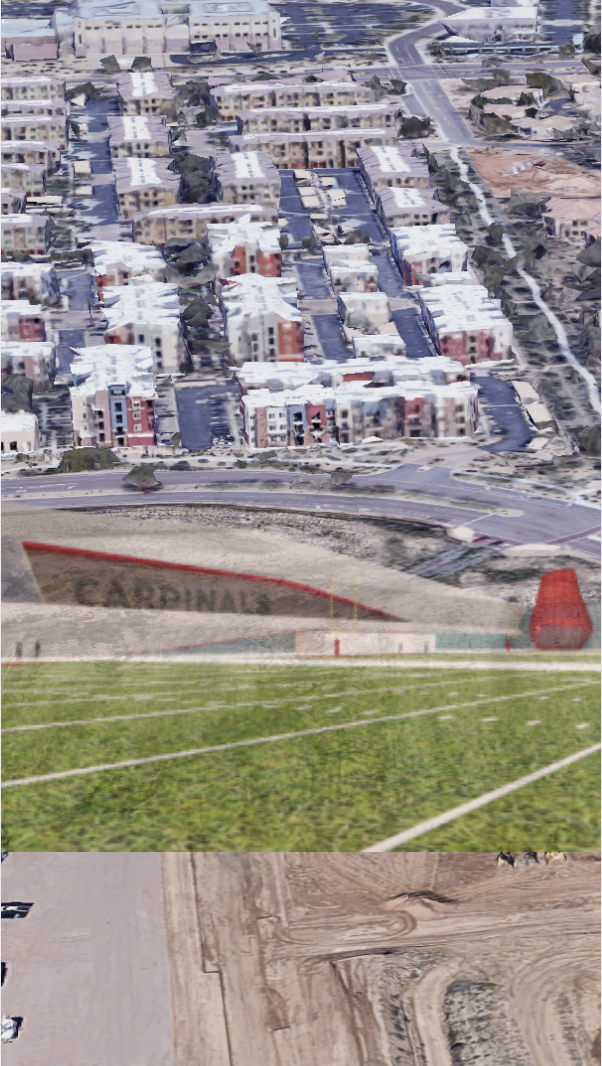 Arizona Cardinals’ $136 Million “Headquarters Alley” Project: How a 217-Acre Deal Will Redefine North Phoenix by 2028
 Public Safety as an Asset Class: The New Scottsdale AdvantageIn today’s Smart City economy, safety isn’t simply about peace of mind—it’s becoming a measurable, marketable asset class. Scottsdale is proving that public safety can be engineered into the fabric of
Nice to meet you! I’m Katrina Golikova, and I believe you landed here for a reason.
I help my clients to reach their real estate goals through thriving creative solutions and love to share my knowledge.