In Q1 2025, Scottsdale streamlined over 78% of its residential and commercial building permit applications through its new digital permitting portal, shortening average approval times by 15 days. This move aligns with Maricopa County's push toward paperless governance, supporting wealth preservation through reduced project delays and predictable holding costs. The streamlined process also reduces personal data exposure by limiting physical document handling, aligning with ISO 37122 smart city standards for resilient urban planning. This digitization fosters value stability for property owners amid evolving tax incentives for sustainable buildings.

Scottsdale continues to draw affluent buyers to masterplanned communities such as Storyrock, Silverstone, and Sereno Canyon, with 2024 Q2 permit activity up 7% compared to the prior year, per Scottsdale city data. New projects integrate advanced home automation, EV-ready infrastructure, and reclaimed water irrigation as standard. For UHNWIs, these features add value by supporting ESG mandates and enabling favorable insurance underwriting. Recent zoning adjustments favor higher-density luxury clusters, while Scottsdale’s primary residence property tax cap provides long-term fiscal predictability. Smart city initiatives ensure these assets remain competitive in a rapidly evolving digital landscape.
Arizona enacted a law in April 2025 canceling a scheduled 2026 vote that would have challenged Scottsdale’s council-approved rezoning for Axon’s proposed headquarters near Hayden Rd/Loop 101, which includes roughly 1,900 apartments and a hotel within a broader employment-anchored plan, thereby cementing near-term entitlement certainty and reducing political timing risk for the sponsor. For wealth holders, stabilized entitlements reduce delay costs across construction capital stacks. Property-tax bases may broaden as the program phases in. The legislative dimension illustrates state preemption over local referendum risk in limited contexts. Value resilience often tracks mixed-use employment anchors with on-site housing. Smart-city angles include integrated mobility, campus energy efficiency, and district services supporting workforce housing supply.
ATTOM Data Solutions reports that foreclosure filings in Maricopa County remain low at 0.09% of housing units as of May 2025, substantially below national averages. Low distressed inventory reduces systemic risk for wealth portfolios and keeps downward pressure on property tax rollbacks to a minimum. Regulatory changes in disclosure rules (Arizona Department of Real Estate) have tightened protections for buyers and lenders. Continued improvements in insurance and climate mitigation practices, particularly in outlying and fire-prone areas, are helping to future-proof both values and community stability.
Goodyear ranks among Arizona’s top 5 cities for per-capita residential permits pulled in 2025, issuing 3,112 new housing permits through June. City capital improvement plan allocations exceed $250M over the next three fiscal years, with significant funds earmarked for water treatment and arterial roads. For real asset managers, the area’s ongoing absorption rate and robust school capacity index make it suitable for long-hold suburban equity. Notably, Goodyear is part of the Maricopa regional sustainability compact and targets near-zero net new water usage per capita by 2030. This positions it favorably with ESG-screened investors.
The I-10 widening between Chandler and Casa Grande is actively under construction, introducing a third general-purpose lane and an HOV lane in each direction, funded through a $1 billion infrastructure program. Scheduled for completion by 2026, this improvement will support significant industrial and residential development in Pinal and Maricopa Counties. Wealth management analysis suggests enduring value for logistics and multifamily assets along this growth corridor. Tax increment districts are under consideration by local authorities, while the project continues to comply with state and federal environmental requirements. HOV lanes and upgraded traffic systems will contribute to long-term corridor efficiency and climate resilience.
Queen Creek and Buckeye are leading the state in residential permit velocity, with Queen Creek issuing over 3,200 single-family permits year-to-date, up 42% YoY, and Buckeye exceeding 2,700, up 38% YoY, according to the Arizona Department of Housing. This rapid acceleration, driven by masterplans like Brookfield’s Alamar and Vistancia South, has prompted renewed scrutiny of municipal water rights, long-term bond structuring, and utility easements under ADWR’s updated groundwater modeling rules. Investors should note the direct correlation between these permitting surges and long-term tax base expansion, offering yield-positive potential. However, developers are being required to integrate sustainable building materials and meet the Arizona Smart Water Use Ordinance criteria, reinforcing the longevity and ESG credentials of these communities.
Peoria and Glendale have launched significant new phases in communities such as Vistancia and Arrowhead Ranch, with permit volume up 8% year-to-date. CoStar data shows strong absorption among luxury and family-oriented product types, with price per square foot holding above $280. Wealth management perspectives highlight the strength of these communities for both income and capital growth. Arizona’s updated property tax assessments maintain affordability while ensuring fiscal stability. City policies require stormwater management and promote solar readiness, ensuring regulatory alignment and long-term resilience.


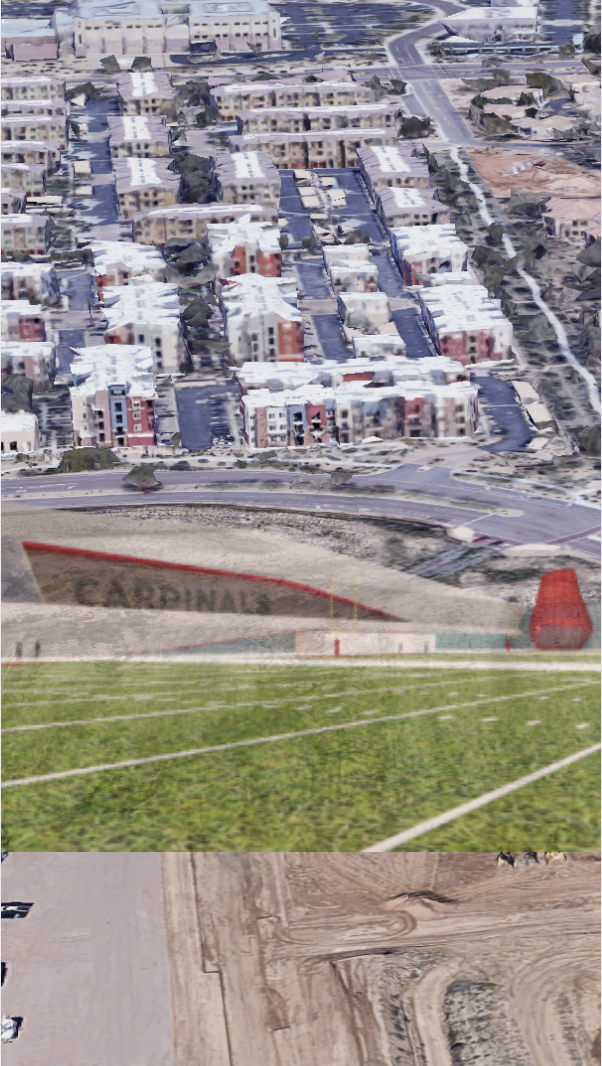 Arizona Cardinals’ $136 Million “Headquarters Alley” Project: How a 217-Acre Deal Will Redefine North Phoenix by 2028
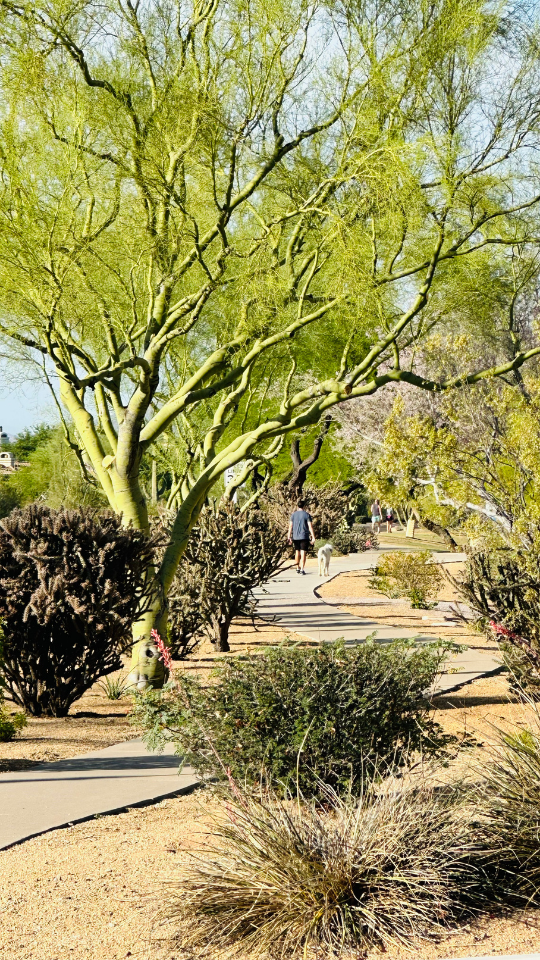 Public Safety as an Asset Class: The New Scottsdale AdvantageIn today’s Smart City economy, safety isn’t simply about peace of mind—it’s becoming a measurable, marketable asset class. Scottsdale is proving that public safety can be engineered into the fabric of
 Built-In Niches & Shadow Alcoves: Reimagining traditional niches as serene display recesses or softly lit altars.In Arizona’s architectural story, the niche has long served as a quiet backdrop—originally practical, sometimes spiritual, often decorative. Today, with the rise of biophilic design, curated
 Scottsdale, Chandler, Gilbert, and Peoria all landed within the top 10 U.S. metros—celebrated for rental affordability, job access, lifestyle quality, and even renter protectionsArizona’s East Valley has quietly emerged as a standout for renters, with Scottsdale, Chandler, Gilbert, and Peoria all landing among the top 10 U.S. metro areas in WalletHub’s 2025 “Best & Worst
 Nice to meet you! I’m Katrina Golikova, and I believe you landed here for a reason.
I help my clients to reach their real estate goals through thriving creative solutions and love to share my knowledge.