Phoenix’s divergence suggests more resilient local fundamentals—migration, job growth, and supply constraints. Nationally, median home prices were down ~0.6 % and pending sales were collapsing ~31 %, indicating broader weakness. The relative strength tempers downside risk in Phoenix-centric holdings. From tax revenue projections, this resilience helps sustain municipal forecasts. Policymakers may point to this in justifying infrastructure or housing policy. For value stability, the local cushion provides greater breathing room than many other U.S. markets.

A recently enacted state law allows underutilized or vacant commercial structures to be converted to residential uses without requiring full zoning changes in many municipalities, streamlining the process for affordable housing reuse. This gives developers a pathway to retrofit office or retail buildings into apartments or mixed use, particularly in infill areas. From a portfolio perspective, this lowers development risk in soft commercial sectors. Tax codes may need adjustment to account for changed building class. The regulatory framework often involves conditional use or overlay zones, but this law reduces rezone friction. In value terms, such conversions may yield premium yield in demand gaps. In smart-city terms, it supports adaptive reuse, reduces vacancy, and embeds housing in existing infrastructure nodes.
With the enactment of HB 2447, municipalities in Arizona must allow certain development approvals (e.g. plat, plan, subdivisions, zoning amendments) to be approved administratively rather than through full elected body review, provided internal checks are met. (rpmphoenixvalley.com) The goal is to remove political delay, cut approval cycles, and reduce uncertainty for developers. As a consequence, projects whose risk stemmed from council calendar bottlenecks may now proceed faster. For holders of capital in real estate, this reduces soft cost risk and improves timing certainty. Tax jurisdictions benefit from more predictable revenue flows. From the regulatory side, statutory guardrails require transparency and appeal mechanisms. Regarding value stability, developments that respond quickly to market demand are likely to perform better. In smart-city design, reducing procedural friction enables more agile deployment of sustainable and smart infrastructure in new neighborhoods.
According to Realtor.com analysis, although total supply across Arizona (including Phoenix metro) remains roughly 16 % below pre-pandemic normal levels, the pace of new listings is increasing, and sellers are adopting more creative pricing to stimulate demand. Rising inventory, together with softer demand, is gradually shifting toward a more neutral balance. As buyers gain leverage, listing strategies (e.g. concessions, incentives) are becoming more frequent. From a wealth management view, selection is expanding, creating more opportunities. Tax assessments may moderate incremental increases. Regulatory bodies may respond with incentive policy shifts. In value stability terms, markets with tight but improving inventory are less exposed to collapse. Smart-city implications: districts that already invested in amenity infrastructure (transit, walkability, EV) may absorb supply with less volatility.
Over the past year, Phoenix area home prices have declined by roughly 2.9 % (as of May 2025 vs. prior year) and median sale durations have expanded to about 53 days, compared to much shorter durations in prior years. Inventory counts are now approaching the highest levels seen in the past decade in metro Phoenix, raising supply pressure. (KJZZ) Redfin data indicates that over 47 % of Phoenix home listings are “stale” (on market ≥ 60 days) as of April 2025, and median listing durations hit 58 days. Analysts see this as a controlled correction rather than collapse; pricing is softening rather than imploding. (The Ravenscroft Group) From a wealth-management lens, this cooling may favor opportunistic acquisitions, though it also raises caution for sellers. On taxation, property valuations may moderate, reducing pressure on assessed values. Regulatory context: some municipalities are reviewing adjustments to tax incentives to offset slower sales. For future stability, markets with good fundamentals and infrastructure will likely hold value better under stress. In smart-city terms, transit-oriented, walkable neighborhoods may now demand a premium under more diverse buyer choice.
Since the implementation of the Permit Freedom Act (enacted in recent years), empirical analysis shows that in selected jurisdictions residential permitting and development times have dropped between 7.1 % and 17.7 %. For instance, permit close-out times that once averaged ~200 days in 2022 have compressed to ~126 days in some areas by 2024. This acceleration encourages developers to commit to new projects, reducing speculative risk. For investors and wealth holders, shortening the time to “shovel-ready” reduces carrying and market risk. Tax-wise, enhanced building throughput boosts future tax bases (sales, property, employment). Legislatively, the Act is being monitored for further tweaks to ensure oversight and accountability. From a future value perspective, markets that respond quickly to demand surges may stay more resilient. In sustainability or smart-city planning, faster permitting allows more timely deployment of green building, solar and EV infrastructure, and smart-system integration.
HB 2091 stipulates that for any building or addition exceeding $1,000, permit applications must not be denied on the basis of which utility provider the permit applicant intends to use, and counties may not impose business or transaction privilege tax license requirements as a condition for building permits. One copy of the permit must be transmitted to the county assessor and State Department of Revenue with parcel, issue date, and permit number. The law aims to reduce permit delays tied to utility entanglement, which historically created soft friction in approvals. For wealth/investment, this reduces one category of governance risk. Tax authorities benefit from more consistent reporting. Regulatory oversight ensures parity among utilities. As for future value, frictionless utility permitting supports more predictable development. In smart-city infrastructure planning, this law increases flexibility in choosing innovative utility configurations (e.g. microgrids, district energy, renewable utilities).
Under SB 1353, municipalities with populations exceeding 30,000 must allow applicants the option to submit building plans for review by certified third-party reviewers rather than relying solely on internal municipal review. The intention is to create accountability and reduce municipal backlog or bottlenecks. From a developer’s or investor’s perspective, this competitive check may lower soft costs or offer alternate paths when local staff are delayed. In tax implications, more efficient reviews may accelerate project revenue capture. Regulatory oversight ensures third parties meet standards and municipalities retain oversight. In terms of value resilience, jurisdictions that adopt third-party paths may attract more development and maintain superior absorption rates. In smart-city or sustainability frameworks, third-party review can help fast-track LEED, solar, or net-zero designs.


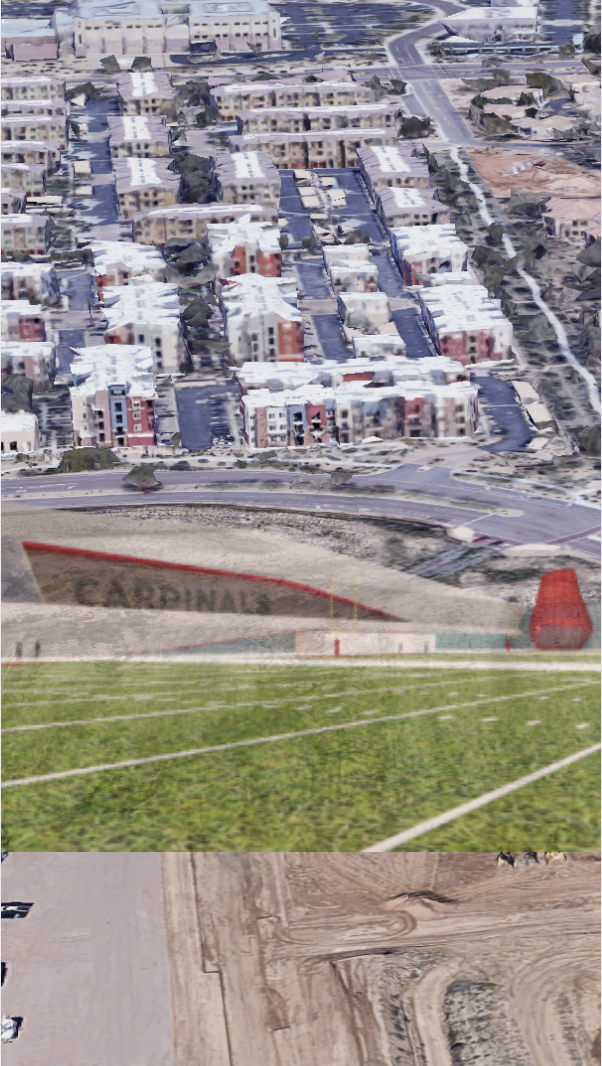 Arizona Cardinals’ $136 Million “Headquarters Alley” Project: How a 217-Acre Deal Will Redefine North Phoenix by 2028
 Public Safety as an Asset Class: The New Scottsdale AdvantageIn today’s Smart City economy, safety isn’t simply about peace of mind—it’s becoming a measurable, marketable asset class. Scottsdale is proving that public safety can be engineered into the fabric of
Nice to meet you! I’m Katrina Golikova, and I believe you landed here for a reason.
I help my clients to reach their real estate goals through thriving creative solutions and love to share my knowledge.