Phoenix’s divergence suggests more resilient local fundamentals—migration, job growth, and supply constraints. Nationally, median home prices were down ~0.6 % and pending sales were collapsing ~31 %, indicating broader weakness. The relative strength tempers downside risk in Phoenix-centric holdings. From tax revenue projections, this resilience helps sustain municipal forecasts. Policymakers may point to this in justifying infrastructure or housing policy. For value stability, the local cushion provides greater breathing room than many other U.S. markets.

The East Valley cities of Chandler, Mesa, and Tempe are seeing a wave of institutional investment in build-to-rent (BTR) masterplanned communities. These projects are characterized by high-density, smart-home integration and professional management, appealing to mobile professionals and down-sizers. Recent legislation has clarified tax treatments for BTR assets, providing more certainty for wealth-management portfolios. Smart-city infrastructure, including EV charging stations and high-speed fiber, is standard in these new developments, enhancing their long-term value and operational efficiency.
Scottsdale’s ARMLS data report a median sale-to-list ratio of 99.6% in Q2 2025, underscoring steady demand for both new and resale homes. With average days on market at 38 (down 11% YOY), new masterplanned communities such as Sereno Canyon and Storyrock are integrating water-wise landscaping, energy-efficient designs, and HOA-driven tax transparency. Regulatory updates in 2025 require new subdivisions to include net-zero-ready options, bolstering wealth preservation for high-net-worth buyers, while the city’s Green Building Program incentivizes sustainable construction.
Sedona Vistas, a premier luxury enclave, is entering its final construction phase with 85% of units pre-sold. The development is notable for its strict adherence to the Sedona Watershed Protection Act, incorporating advanced xeriscaping and greywater systems. Wealth management experts highlight that such sustainability-focused communities often command higher resale premiums and lower insurance costs. Property taxes in Sedona are trending slightly higher due to municipal open-space acquisitions, but the value retention of luxury masterplanned assets continues to outpace broader Yavapai County averages. The community also features dark-sky-compliant lighting and integrated smart-home security systems.
Mesa’s Eastmark community, a flagship 3,200-acre MPC, has launched a new "Smart Power" pilot program in partnership with SRP, utilizing home-battery storage and community microgrids. This initiative, alongside the ongoing development of the Cadence masterplan, reinforces Mesa’s position as a leader in smart-city residential planning. ARMLS data shows Eastmark home values remain stable, with a median price per square foot of $315 as of July 2025. Wealth management strategies focus on these assets for their high durability and ESG-compliant infrastructure. Legislative support for "Renewable Energy Districts" allows these communities to benefit from localized tax credits, further enhancing their financial appeal.
Casa Grande’s Villago and Mission Royale masterplans have secured new water certificates under the 2025 Pinal County Groundwater Management Act, unlocking over 2,400 additional residential lots. This regulatory milestone has spurred a surge in builder activity, with D.R. Horton and Lennar launching new phases this summer. These developments are prioritizing water-neutral building practices, including high-efficiency plumbing and smart-leak detection. From a tax lens, the expansion of Casa Grande’s tax base is expected to support future infrastructure bonds without raising mill rates for existing residents. Wealth advisors view Casa Grande as a strategic "growth-and-yield" play within the Arizona market.
Queen Creek and Buckeye are leading the state in residential permit velocity, with Queen Creek issuing over 3,200 single-family permits year-to-date, up 42% YoY, and Buckeye exceeding 2,700, up 38% YoY, according to the Arizona Department of Housing. This rapid acceleration, driven by masterplans like Brookfield’s Alamar and Vistancia South, has prompted renewed scrutiny of municipal water rights, long-term bond structuring, and utility easements under ADWR’s updated groundwater modeling rules. Investors should note the direct correlation between these permitting surges and long-term tax base expansion, offering yield-positive potential. However, developers are being required to integrate sustainable building materials and meet the Arizona Smart Water Use Ordinance criteria, reinforcing the longevity and ESG credentials of these communities.
Masterplanned communities in Tempe and Chandler, such as The Lakes and Ocotillo, are seeing renewed interest from both local and interstate buyers, with Q2 2024 home closings up 6%. Redfin data reveals that these communities consistently outperform metro benchmarks for price stability and resale pace. The cities’ progressive tax policies and robust public infrastructure support multi-generational wealth strategies. Regulatory efforts focus on flood control, mobility innovation, and sustainability mandates for new construction. Homebuilders are piloting smart energy and community Wi-Fi as standard, reinforcing future-proof value for discerning buyers.


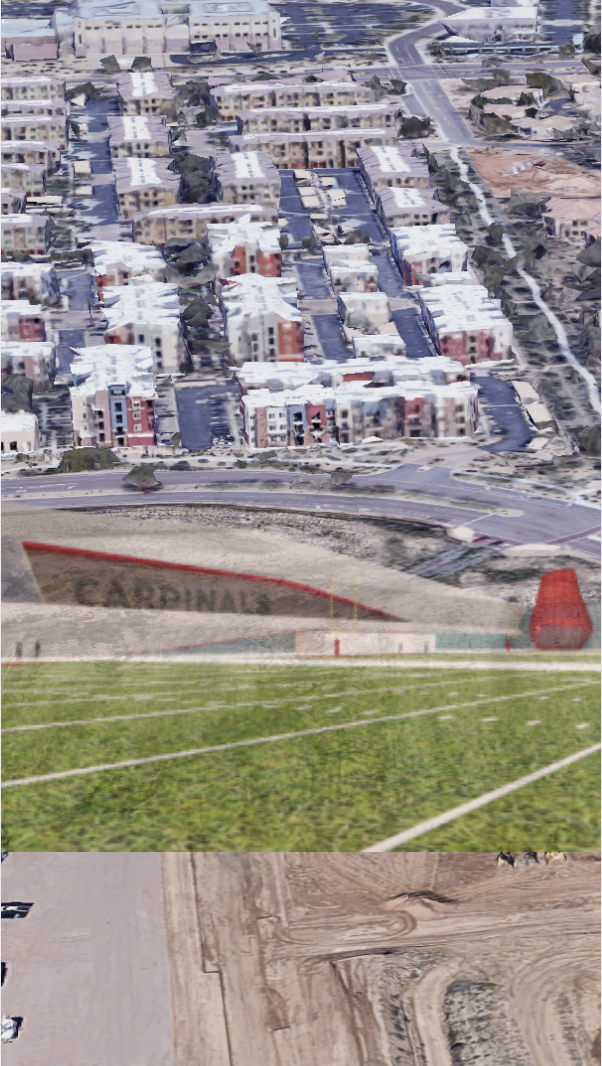 Arizona Cardinals’ $136 Million “Headquarters Alley” Project: How a 217-Acre Deal Will Redefine North Phoenix by 2028
 Public Safety as an Asset Class: The New Scottsdale AdvantageIn today’s Smart City economy, safety isn’t simply about peace of mind—it’s becoming a measurable, marketable asset class. Scottsdale is proving that public safety can be engineered into the fabric of
Nice to meet you! I’m Katrina Golikova, and I believe you landed here for a reason.
I help my clients to reach their real estate goals through thriving creative solutions and love to share my knowledge.