Phoenix’s divergence suggests more resilient local fundamentals—migration, job growth, and supply constraints. Nationally, median home prices were down ~0.6 % and pending sales were collapsing ~31 %, indicating broader weakness. The relative strength tempers downside risk in Phoenix-centric holdings. From tax revenue projections, this resilience helps sustain municipal forecasts. Policymakers may point to this in justifying infrastructure or housing policy. For value stability, the local cushion provides greater breathing room than many other U.S. markets.

The ongoing expansion of the Valley Metro Rail—notably the South Central and Northwest phases—continues to reshape property value profiles in adjacent urban hubs. With over 28 miles of active track and further extensions planned, transit-oriented development (TOD) rezonings have increased by 15% in 2024–2025. For wealth management, TOD assets offer increased rent stability and appeal to a younger, mobility-conscious demographic. Property tax impacts are generally positive, driven by increased property assessments rather than rate hikes. Legislative voter backing for Proposition 104 in 2015 underpins such long‑term planning. Environmentally, reduced car dependency aligns with sustainability goals, while smart-city infrastructure enhances livability.
Combined residential permit volume in Buckeye and Queen Creek grew 22.3% in H1 2025, with each town exceeding Scottsdale and Tempe combined. This marks a 14% year-over-year increase in west and southeast corridor permits, despite cooling in central submarkets. Tax policy implications include delayed revenue realization due to lagging buildout and occupancy. However, from a strategic family office perspective, lower land costs and amenity buildout potential offer long-run upside. Local zoning remains suburban in form, but Queen Creek and Buckeye are exploring mixed-use overlays. These expansion nodes will require enhanced water, transit, and tech infrastructure to maintain resilience.
Queen Creek has approved over 450,000 square feet of new commercial and mixed-use space as of July 2025, primarily clustered around the Town Center and Rittenhouse corridors. These projects provide necessary services for the rapidly expanding residential base and contribute to town tax revenues. Zoning updates emphasize walkability and aesthetic alignment with existing neighborhoods. Smart-city elements include integrated fiber and adaptive street lighting to enhance local utility performance.
Buckeye, the fastest-growing city in the U.S. by percentage growth according to the Census Bureau, is pushing forward on major expansions within Verrado and Tartesso masterplanned communities. With over 1,000 building permits issued in the last 12 months and home prices averaging $449,000 (ARMLS), the city’s infrastructure investments—spanning water rights allocations and loop road expansions—are attracting attention from institutional investors. Tax districts within these communities offer partial financing for amenities, creating implications for bond-based estate planning.
Across Greater Phoenix, Tucson, and statewide, ongoing legislative actions focus on water usage, short-term rental regulations, and sustainable building codes. These policies underpin both the tax environment and the resilience of property values in new and established masterplanned communities. Wealth managers highlight Arizona’s ongoing appeal for high-net-worth migration, supported by moderate property taxes and clear estate planning pathways. From a smart-city standpoint, municipalities increasingly require digital infrastructure, renewable energy, and climate-resilient features in all new large-scale projects, reinforcing their attractiveness for discerning, privacy-focused buyers.
Show Low has updated its municipal fire protection ordinance (Ord. 2025-04), requiring all new masterplanned subdivisions to incorporate fire-resistant building materials and 100-foot defensible-space perimeters. Communities like Torreon and Bison Golf Club are leading this shift, integrating these standards into their HOA bylaws. For wealth managers, these regulatory updates are critical for maintaining asset value and securing favorable insurance terms in high-risk zones. Show Low’s property tax rates remain among the lowest in the state, supporting seasonal ownership and retirement strategies. Smart-city tech, such as community-wide wildfire detection sensors, is currently being piloted in several new developments.
Chandler’s Ryan Ridge and Greystar's Build-to-Rent developments are setting new standards for masterplanned rental living, featuring gigabit internet and integrated smart-access systems. These projects respond to Chandler’s 2025 High-Density Infill Strategy, which prioritizes tech-enabled living near major employment corridors. For wealth portfolios, these assets offer stable rental yields and tax-advantaged depreciation schedules. Regulatory updates in Chandler now require new large-scale residential projects to include a minimum of 5% EV charging capacity, future-proofing the community against shifts in automotive tech. The city’s low municipal property tax rate continues to be a primary driver for both institutional and individual investment.


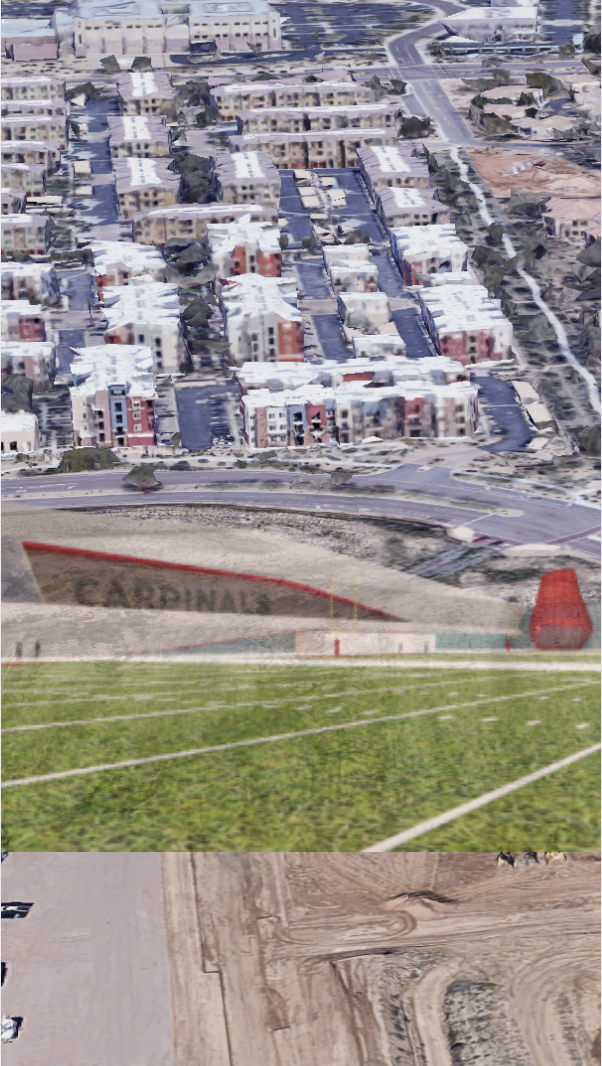 Arizona Cardinals’ $136 Million “Headquarters Alley” Project: How a 217-Acre Deal Will Redefine North Phoenix by 2028
 Public Safety as an Asset Class: The New Scottsdale AdvantageIn today’s Smart City economy, safety isn’t simply about peace of mind—it’s becoming a measurable, marketable asset class. Scottsdale is proving that public safety can be engineered into the fabric of
Nice to meet you! I’m Katrina Golikova, and I believe you landed here for a reason.
I help my clients to reach their real estate goals through thriving creative solutions and love to share my knowledge.