Phoenix’s divergence suggests more resilient local fundamentals—migration, job growth, and supply constraints. Nationally, median home prices were down ~0.6 % and pending sales were collapsing ~31 %, indicating broader weakness. The relative strength tempers downside risk in Phoenix-centric holdings. From tax revenue projections, this resilience helps sustain municipal forecasts. Policymakers may point to this in justifying infrastructure or housing policy. For value stability, the local cushion provides greater breathing room than many other U.S. markets.

Intel’s $20 billion semiconductor facility in Chandler remains the state’s largest ongoing industrial project, with construction on track for completion in late 2025. The expansion is expected to generate over 3,000 permanent jobs and bolster the tax base. Wealth managers note significant local economic ripple effects. Arizona’s tax credits for manufacturing continue to attract capital. The facility incorporates advanced water reclamation systems, supporting Chandler’s sustainability initiatives and providing value insulation for adjacent landholders.
Mesa’s Planning Division unveiled a master plan for the West Gateway district, incorporating large-scale bio-retention basins and greenways. New residential developers must comply with updated stormwater retention codes, balancing higher upfront costs with lower long-term drainage fees. Such resilience measures shield assets from flood damage risks, preserving insurability and enhancing market reputation for eco-sensitive buyers.
Queen Creek and the surrounding Southeast Valley have seen residential permit activity jump 14% year-to-date, driven by masterplanned communities like Barney Farms and Harvest. Municipal trackers report that new home starts are keeping pace with absorption, with inventory turnover for new builds remaining below 45 days. Wealth managers note that Queen Creek’s investment in road and utility infrastructure is a primary driver for value retention. Pinal County’s tax structure continues to attract buyers looking for lower carrying costs, while town ordinances promote water conservation through greywater-ready home designs.
Across Greater Phoenix, over 22,000 residential building permits were issued in the past 12 months, with notable concentrations in Buckeye, Queen Creek, and Goodyear—areas offering both affordability and future growth runway. Yardi Matrix reports multifamily vacancy holding at 5.2%, indicating supply absorption is matching demand. Wealth managers and family offices are increasingly targeting new developments for portfolio diversification. Local governments are leveraging impact fee reforms and state incentives to expedite approvals, fostering smart growth and encouraging adaptive reuse. Infrastructure upgrades—especially water resource investments—are prioritized in regional capital budgets to support sustainable expansion.
Greater Phoenix’s multifamily sector remains resilient, with CoStar and Yardi Matrix reporting vacancy rates steady at 6.2% and effective rent growth of 3.1% year-over-year as of June 2025. Demand is strongest in Peoria, Tempe, and Gilbert, driven by job growth and in-migration. Wealth portfolios with multifamily assets benefit from stabilized income streams, while depreciation schedules and 1031 exchanges are actively leveraged for tax planning. Regulatory discussions continue around rental caps and tenant protections, with municipalities balancing affordability and investor returns. Developers are increasingly required to include smart building infrastructure and energy-efficient design to meet evolving city codes and attract sustainability-conscious tenants.
In April 2025, 5,416 newly built homes closed in the Phoenix metro—a 4.6 % increase year-over-year, per ARMLS data Scottsdale Desert Inspections. Major builders such as D.R. Horton recorded 2,680 closings through mid‑2025, marking Phoenix as a top‑3 new‑home market in the U.S. The Business Journals. For high‑net‑worth investors, this surge increases opportunities in residential value‑add, while local transaction taxes benefit municipal revenues. Arizona’s builder‑friendly permitting laws smooth supply chain, supporting long‑term price support even amid interest rate shifts. Sustainability programs tied to solar incentives enhance future‑proofing, and smart‑growth zoning in places like Laveen and East Mesa aligns with infrastructure planning.
Litchfield Park council has greenlit a new boutique retail development designed to serve the affluent Litchfield Park and Verrado areas. The project incorporates sustainable design elements and smart-parking tech. This addition is expected to boost local property values and provide new revenue streams for the city. Wealth managers note that high-quality retail amenities are key factors in community desirability and asset value retention.


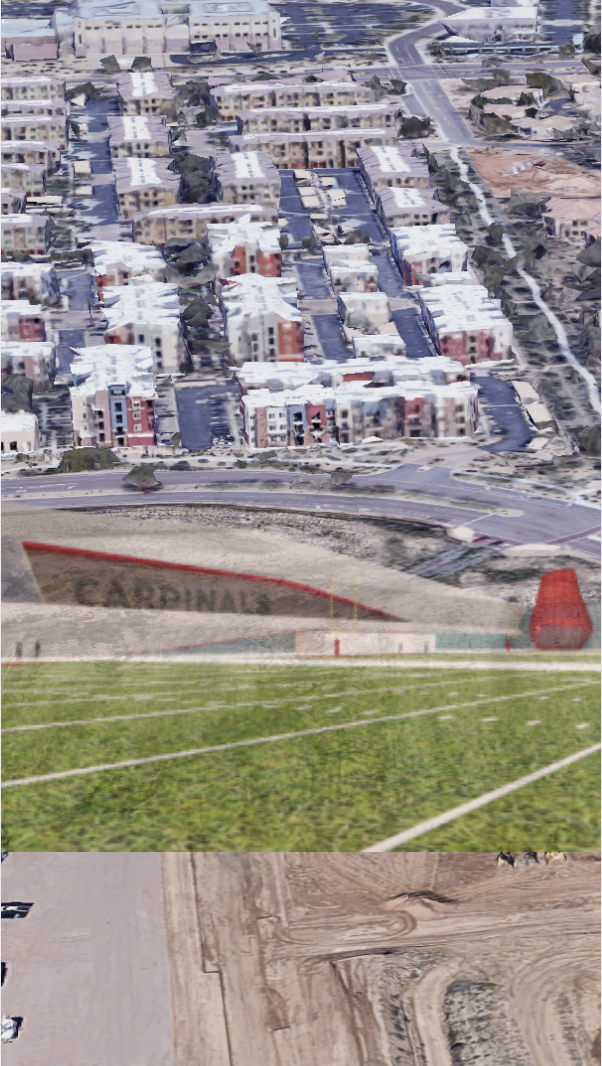 Arizona Cardinals’ $136 Million “Headquarters Alley” Project: How a 217-Acre Deal Will Redefine North Phoenix by 2028
 Public Safety as an Asset Class: The New Scottsdale AdvantageIn today’s Smart City economy, safety isn’t simply about peace of mind—it’s becoming a measurable, marketable asset class. Scottsdale is proving that public safety can be engineered into the fabric of
Nice to meet you! I’m Katrina Golikova, and I believe you landed here for a reason.
I help my clients to reach their real estate goals through thriving creative solutions and love to share my knowledge.