Phoenix’s divergence suggests more resilient local fundamentals—migration, job growth, and supply constraints. Nationally, median home prices were down ~0.6 % and pending sales were collapsing ~31 %, indicating broader weakness. The relative strength tempers downside risk in Phoenix-centric holdings. From tax revenue projections, this resilience helps sustain municipal forecasts. Policymakers may point to this in justifying infrastructure or housing policy. For value stability, the local cushion provides greater breathing room than many other U.S. markets.

As of June 2025, the Phoenix-Mesa-Scottsdale metro area saw year-over-year median sale price growth of 2.7%, with the median reaching $477,000, according to ARMLS and Redfin. Monthly inventory stands at 2.1 months—an increase of 15% over the previous year—reflecting a modest shift toward buyer leverage. Institutional and high-net-worth investors remain active, though the luxury segment (>$2M) reported a 5% decline in transaction volume, reflecting selective capital allocation. Recent changes to Arizona’s property valuation rules, which increased transparency in assessed values, could modestly affect estate planning and long-term tax exposures. Smart-city initiatives, including Phoenix’s “Cool Pavement” expansion and new EV charging corridor projects, continue to underpin future-proofing efforts for urban assets.
Show Low continues to record strong absorption in new residential subdivisions, according to city records. These assets offer portfolio diversification and inflation resilience for wealth managers. Low property tax rates and recently adopted wildfire mitigation codes support enduring property value and climate risk mitigation.
Prescott’s median home value has increased 6.9% annually as of Q2 2025, per Zillow, with strong activity in the $600K–$900K bracket. Homeownership remains above 70%, and the average home age exceeds 28 years—highlighting a mature but stable market. For estate planners, Prescott’s senior-skewed demographic and consistent appreciation profile offer conservatively appreciating assets for intergenerational trusts. Legislative focus includes streamlined approval of accessory cottages under SB2110, popular for caretaker and aging-in-place models. The town continues to invest in fire-resilient infrastructure and has adopted a managed-growth plan limiting exurban sprawl, enhancing long-term valuation integrity.
Paradise Valley's median list price reached $4.1M in June 2025, with only 2.2 months of inventory on the market — the lowest in three years per Redfin MLS feeds. Homes in the $5M+ tier are selling in under 58 days on average, a 22% improvement year-over-year. The concentration of UHNW buyers has increased the share of cash deals to 61%, reflecting heightened portfolio diversification into non-correlated, physical assets. Legislative clarity on accessory dwellings and hillside construction (per Paradise Valley’s Planning Commission adjustments) provides regulatory predictability for custom homebuilders. Sustainability mandates for new construction, including solar prewiring and xeriscaping, enhance long-term appeal for ESG-aligned capital.
Florence and Apache Junction are among the few submarkets in Pinal County with more than 35% of their housing built post-2010, according to Census housing stock data. Combined with low property tax rates and per capita water allocations above state averages, these towns present advantageous ground for long-horizon development. For family offices and private builders, land prices remain below $5/sf in multiple entitled parcels. Infrastructure expansions including the North-South Corridor and SR24 extension are backed by multi-jurisdictional capital improvement plans, which will significantly shorten commute times to East Valley employment centers.
Communities like Trilogy at Verde River, Troon North, and Desert Mountain continue to command median price-per-square-foot rates above $650, supported by exclusivity, lifestyle amenities, and protected viewsheds. Days on market in this corridor average just 29 for turnkey listings. Many transactions are cash or trust-structured, reinforcing the area's reputation as a legacy asset zone. Regulatory attention includes County-level wildfire defensible space requirements, now enforced as of April 2025. Smart irrigation systems and advanced water metering have become standard in new luxury builds, contributing to value preservation and smart-home energy scores often used in insurance underwriting.
ARMLS data indicates homes in Fountain Hills priced between $850K–$1.5M now average 59 days on market, with a contract ratio of 25.4, reflecting softening mid-luxury demand. Cromford Report’s demand index for the area dipped below 85 (balanced = 100) for the first time in 18 months. The town’s topographic constraints and master-planned nature help preserve character but limit large-scale infill. Given Proposition 400’s proposed East Valley transit extensions, buyers investing in this window may benefit from future connectivity boosts. The area's proactive wildfire mitigation zone planning enhances insurance resilience for HNW buyers.


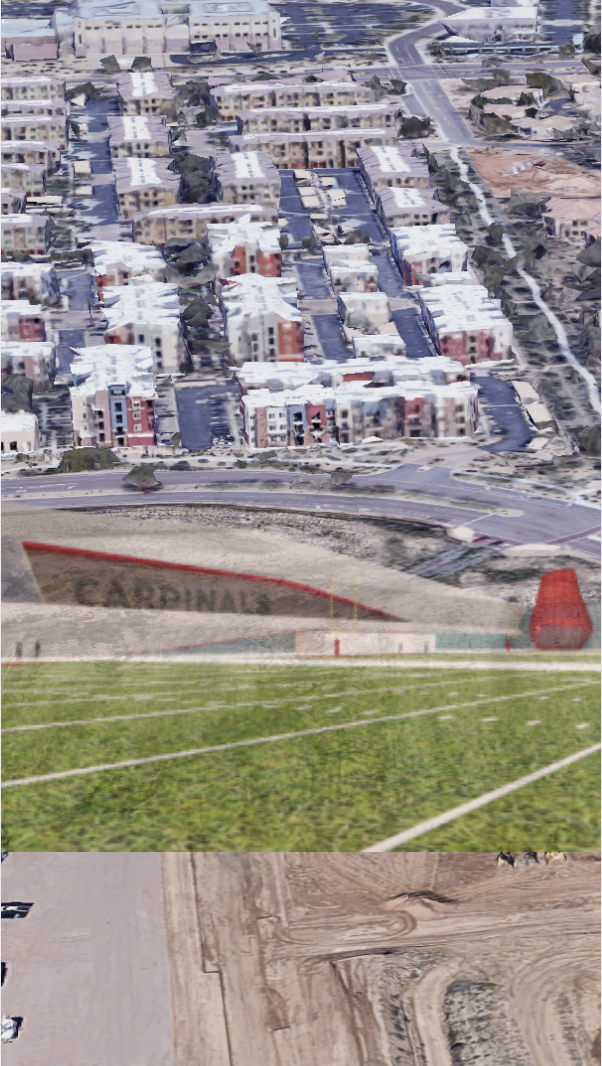 Arizona Cardinals’ $136 Million “Headquarters Alley” Project: How a 217-Acre Deal Will Redefine North Phoenix by 2028
 Public Safety as an Asset Class: The New Scottsdale AdvantageIn today’s Smart City economy, safety isn’t simply about peace of mind—it’s becoming a measurable, marketable asset class. Scottsdale is proving that public safety can be engineered into the fabric of
Nice to meet you! I’m Katrina Golikova, and I believe you landed here for a reason.
I help my clients to reach their real estate goals through thriving creative solutions and love to share my knowledge.