On June 24, 2025, Maricopa County Board of Supervisors adopted a zoning amendment streamlining approvals for mixed-use and high-density multifamily developments within transit corridors, notably along Central Phoenix, Tempe, and Mesa. The regulatory change reduces conditional use permit timelines by up to 40 days and introduces density bonuses for incorporating renewable energy or affordable units. This framework increases certainty for institutional portfolios and supports urban-infill wealth management strategies. Property tax implications center on the shift from commercial to higher-density residential assessments, which can affect long-term cash flow models. Future-proof development is further supported by new requirements for gigabit-ready digital infrastructure in all new multifamily projects.

Cave Creek and Carefree recorded a median sales price of $1.12M in May 2025, with inventory dropping 18% since February. Both towns maintain fewer than 1.8 months of supply, reflecting strong demand for semi-rural acreage and view lots. For estate planners, large-lot zoning and lifestyle orientation offer low-density buffers for privacy-driven clients. Municipal permit data reveals sustained demand for horse-property upgrades and ADU construction, aligned with SB2119 easing restrictions. Sustainability-conscious buyers benefit from water conservation overlays and septic-to-sewer conversions incentivized by county credits.
In Scottsdale, homes priced above $1.5M have experienced a 14% reduction in active listings over the past 90 days, while price cuts in this segment have dropped to 9.3%, down from 13.2% in early 2025 (Zillow). Cromford's Contract Ratio in the 85255 ZIP remains above 100, indicating strong demand outpacing supply. For tax-aware investors, Scottsdale’s stable high-value property base supports predictable appreciation and beneficial 1031 exchange scenarios. The city’s updated DRB guidelines streamline entitlements, particularly for green-certified and luxury hillside builds, enhancing regulatory efficiency. Scottsdale's “Smart City” blueprint emphasizes IoT-integrated infrastructure and fire-risk reduction through vegetation mapping—vital for long-term asset preservation.
Recent state legislation, including HB2447 and HB2110, mandates streamlined permitting and expanded rights for accessory dwellings and mixed-use conversions across Arizona municipalities. These regulatory shifts are designed to address housing shortages and improve capital efficiency for developers and private investors. Local governments are concurrently updating zoning ordinances to align with state mandates, a move that fosters flexibility and preserves value stability across market cycles. Smart-city initiatives, such as digital permit tracking and real-time public hearings, enhance transparency and community engagement.
Chandler and Mesa are nearing mature build-out, with Chandler estimated at 88% and Mesa at 84% of developable land utilized, based on municipal GIS and regional planning data. This saturation constrains new supply, increasing the focus on strategic infill and redevelopment of underused commercial parcels. Wealth managers recognize this trend as supportive of value retention for existing properties. Cities are rolling out tax incentives for redevelopment projects, particularly those converting retail to residential or mixed-use. Legislative changes have reduced procedural barriers for infill, accelerating project timelines. 31Sustainable redevelopment—such as adaptive reuse and walkable mixed-use districts—is a key theme in planning commission agendas, further future-proofing the local market.
Despite a 15% YOY increase in single-family and multifamily permits in Buckeye and Goodyear, BLS reports show local construction employment remains flat, with trade labor shortages cited as a top delay factor. Median permit-to-completion timelines have extended to 8.9 months, up from 6.7 in early 2024. Developers are responding with off-site modular strategies and incentive packages. From a fiscal angle, extended build timelines increase carrying costs and taxable assessments mid-phase. These constraints could limit new supply despite high zoned land availability, reinforcing price stability. Smart-city frameworks under review include expedited e-inspection pilots and prefabricated material codes.
The first segment of the SR 30 (Southwest Valley Parkway) is undergoing initial right-of-way acquisition, with construction expected to begin circa 2027 and extending through the next decade to complete all three segments. Upon full build-out, this corridor will serve as a major freight and commuter route for the Southwest Valley, enhancing industrial land absorption and future-proofing investor positions. State and local governments have earmarked significant funds and continue to update tax assessment protocols for newly urbanized parcels. The project is subject to evolving Arizona environmental statutes, and transportation planners emphasize sustainable design, including multi-modal pathways and flood mitigation.
As of June 2025, the Phoenix-Mesa-Scottsdale metro area saw year-over-year median sale price growth of 2.7%, with the median reaching $477,000, according to ARMLS and Redfin. Monthly inventory stands at 2.1 months—an increase of 15% over the previous year—reflecting a modest shift toward buyer leverage. Institutional and high-net-worth investors remain active, though the luxury segment (>$2M) reported a 5% decline in transaction volume, reflecting selective capital allocation. Recent changes to Arizona’s property valuation rules, which increased transparency in assessed values, could modestly affect estate planning and long-term tax exposures. Smart-city initiatives, including Phoenix’s “Cool Pavement” expansion and new EV charging corridor projects, continue to underpin future-proofing efforts for urban assets.


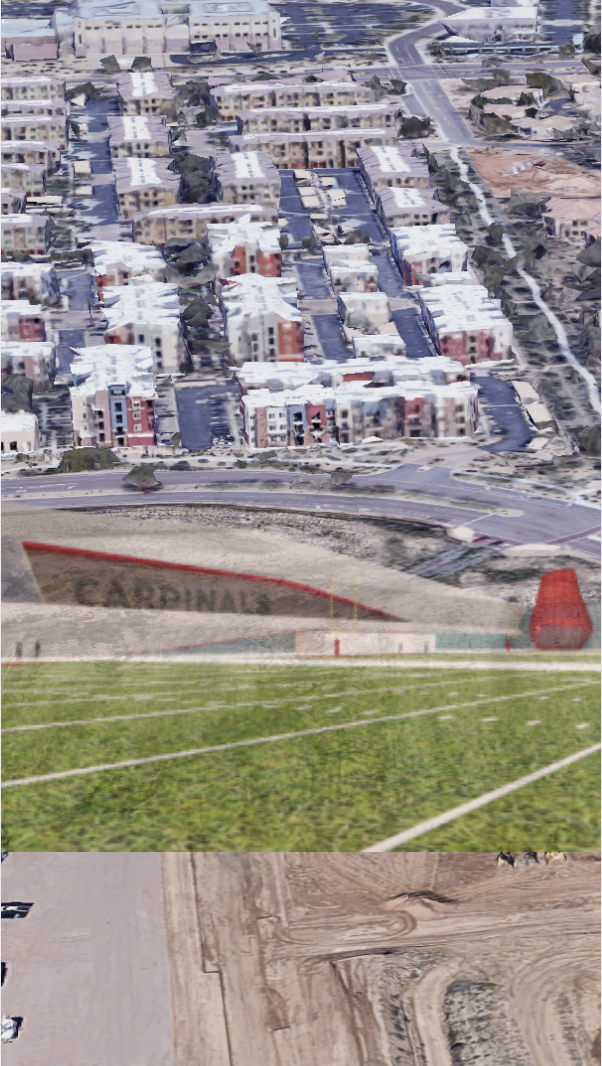 Arizona Cardinals’ $136 Million “Headquarters Alley” Project: How a 217-Acre Deal Will Redefine North Phoenix by 2028
 Public Safety as an Asset Class: The New Scottsdale AdvantageIn today’s Smart City economy, safety isn’t simply about peace of mind—it’s becoming a measurable, marketable asset class. Scottsdale is proving that public safety can be engineered into the fabric of
Nice to meet you! I’m Katrina Golikova, and I believe you landed here for a reason.
I help my clients to reach their real estate goals through thriving creative solutions and love to share my knowledge.