On June 24, 2025, Maricopa County Board of Supervisors adopted a zoning amendment streamlining approvals for mixed-use and high-density multifamily developments within transit corridors, notably along Central Phoenix, Tempe, and Mesa. The regulatory change reduces conditional use permit timelines by up to 40 days and introduces density bonuses for incorporating renewable energy or affordable units. This framework increases certainty for institutional portfolios and supports urban-infill wealth management strategies. Property tax implications center on the shift from commercial to higher-density residential assessments, which can affect long-term cash flow models. Future-proof development is further supported by new requirements for gigabit-ready digital infrastructure in all new multifamily projects.

Across Greater Phoenix, Tucson, and statewide, ongoing legislative actions focus on water usage, short-term rental regulations, and sustainable building codes. These policies underpin both the tax environment and the resilience of property values in new and established masterplanned communities. Wealth managers highlight Arizona’s ongoing appeal for high-net-worth migration, supported by moderate property taxes and clear estate planning pathways. From a smart-city standpoint, municipalities increasingly require digital infrastructure, renewable energy, and climate-resilient features in all new large-scale projects, reinforcing their attractiveness for discerning, privacy-focused buyers.
Phoenix has launched a $12 million smart traffic signal pilot on Bell Road, using AI to reduce congestion and emissions. Nearby commercial landlords may benefit from improved access flows. Local taxpayers partially fund the project via transportation bonds. The initiative exemplifies the city’s broader resilience and sustainability blueprint, positioning adjacent corridors as premium retail and mixed-use targets.
On June 30, 2025, the Arizona State Legislature advanced a ballot measure for November 2025 proposing to cap annual increases in property taxes for owner-occupied primary residences at 3%, mirroring similar measures in California and Texas. If approved, this change will affect wealth management strategies, potentially increasing the appeal of long-term ownership and estate transfers. Municipal governments caution that the measure may constrain future revenue for public services, impacting future infrastructure investment. From a future-proofing lens, predictable property taxes are likely to enhance financial planning certainty but may shift fiscal pressures to commercial and investment properties.
The luxury market in Phoenix saw a 17% year‑over‑year increase in luxury home listings in Q1 2025, followed by another 15% gain in Q2. For wealth managers, this expansion signals differentiated asset allocation opportunities in high‑end segments, albeit with longer average holding periods. The stable zoning regime and absence of rate hikes have muted tax volatility, while ongoing city parcel rezoning efforts are expanding building opportunity zones. From a sustainability lens, new luxury projects increasingly request green‑certification incentives, bolstering long‑run appeal in upscale resale markets. With this elevated listings baseline, pricing resilience remains intact, supporting future capital preservation.
In Paradise Valley, the Cromford Report shows active luxury listings above $3M increased by 11% since June, now totaling 196 homes, while the contract ratio slipped to 31.8—its lowest since Q1 2024. Despite median sold prices remaining above $4.1M, DOM has expanded to 72 days. Family office strategists monitoring this corridor for wealth preservation may consider the implications of stagnant liquidity amid growing inventory. The area’s zoning rigidity and limited short-term rental allowances help maintain long-term value stability, but also constrain adaptive reuse potential. PV’s tree canopy and dark-sky compliance remain central to its smart-growth reputation.
As of Q2 2025, new construction activity in the Southeast Valley continues to lead the Phoenix metro. Queen Creek, Gilbert, and East Mesa collectively account for over 42% of all new home permits issued in Maricopa County, according to the Arizona State Demographer’s Office and local municipal permit trackers. Queen Creek alone saw a 17.8% year-over-year increase in issued residential permits, led by masterplans like Barney Farms by Fulton Homes and Harvest at Queen Creek by Brookfield. These communities are incorporating all-electric homes, greywater recycling systems, and high-speed fiber infrastructure, aligning with ESG-conscious wealth preservation. From a legislative angle, the Queen Creek Town Council updated its infrastructure fee schedule in March 2025 to accommodate utility scaling without increasing general tax burdens.
Mesa’s job growth rate stands at 5.4% annually as of Q2 2025, according to the Arizona Commerce Authority, driven by semiconductors, advanced manufacturing, and logistics. Residential development around the Valley Metro Light Rail extension has increased housing permit activity by 9.1% in TOD overlay zones. Wealth management professionals may view this alignment of employment and housing infrastructure as a hedge against macroeconomic volatility. Mesa's zoning amendments, which fast-track mid-density residential near transit nodes, also qualify for federal TOD infrastructure financing. Utility-scale broadband and solar resiliency initiatives further Mesa’s profile as a future-ready investment location.


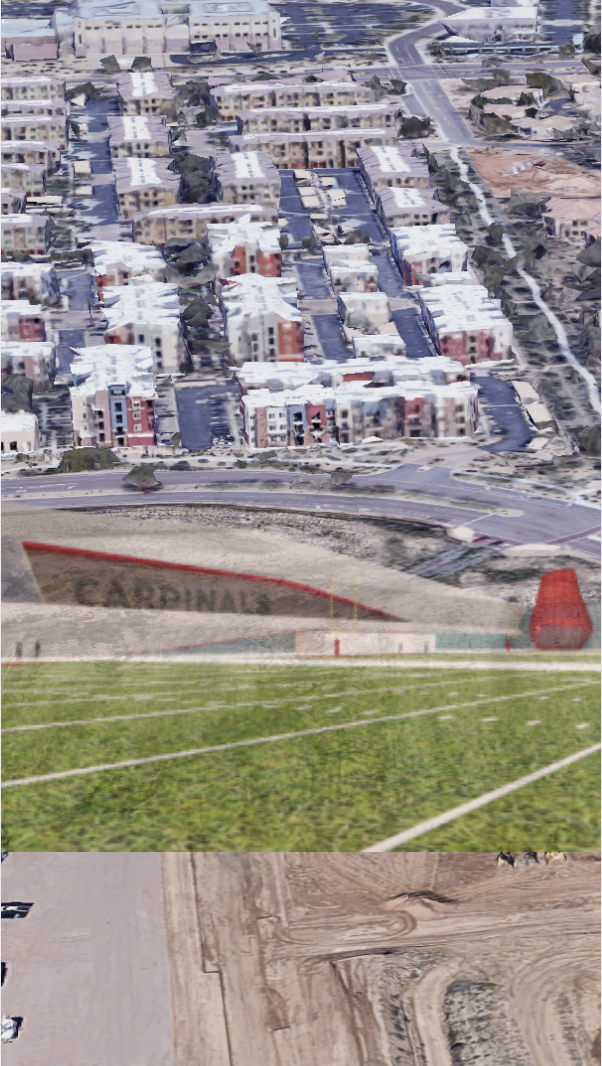 Arizona Cardinals’ $136 Million “Headquarters Alley” Project: How a 217-Acre Deal Will Redefine North Phoenix by 2028
 Public Safety as an Asset Class: The New Scottsdale AdvantageIn today’s Smart City economy, safety isn’t simply about peace of mind—it’s becoming a measurable, marketable asset class. Scottsdale is proving that public safety can be engineered into the fabric of
 Indoor Breezeways & Gallery Passages: Channeling traditional Arizona “zaguan” entries into fluid interior corridors.Arizona’s history of passageways is far richer than many realize. The zaguan, a wide, shaded entry that connected the street to the heart of Spanish Colonial homes, once served as both a cooling
 Nice to meet you! I’m Katrina Golikova, and I believe you landed here for a reason.
I help my clients to reach their real estate goals through thriving creative solutions and love to share my knowledge.