On June 24, 2025, Maricopa County Board of Supervisors adopted a zoning amendment streamlining approvals for mixed-use and high-density multifamily developments within transit corridors, notably along Central Phoenix, Tempe, and Mesa. The regulatory change reduces conditional use permit timelines by up to 40 days and introduces density bonuses for incorporating renewable energy or affordable units. This framework increases certainty for institutional portfolios and supports urban-infill wealth management strategies. Property tax implications center on the shift from commercial to higher-density residential assessments, which can affect long-term cash flow models. Future-proof development is further supported by new requirements for gigabit-ready digital infrastructure in all new multifamily projects.

A July 2025 city manager briefing cites 3,100+ residential permits in 2024 and a 2025 projection of ~2,900, against a five-year average of ~2,700, while separate reporting underscores Buckeye’s status among the nation’s fastest-growing cities and an August 2025 state budget action funding key highway corridors in Buckeye and Maricopa, supporting access for master-planned growth nodes. From a wealth angle, sustained permitting indicates durable absorption. Taxes expand with rooftops and supporting retail. Regulators are managing water-assured-supply constraints through state programs. Value stability remains linked to transportation phasing. Smart-city benefits include connected arterials and utility planning.
In July 2025 Mesa adopted zoning text regulating data centers’ operations and siting, following a Planning & Zoning recommendation in late June, and advanced its 2025 Zoning Code Refinement amendments updating chapters related to Accessory Dwelling Units, detached accessory buildings and home occupations; the city also aligned ordinance references with the ratified 2050 General Plan and continued case-by-case multifamily rezonings, supporting structured growth. Investors may view clearer industrial digital-infrastructure rules and gentle infill tools as risk-reducing. Tax impacts are positive as taxable improvements scale. The regulatory framework now better reflects current general plan terminology. Value resilience benefits from diversified use mix and updated standards. Smart-city implications include grid coordination, noise/energy controls, and efficient water use in high-load assets.
Average advertised asking rents in metro Phoenix declined 3.1% year over year to about $1,550 as of April, according to Yardi Matrix’s June 2025 metro report. New supply pressured stabilized occupancy to roughly 93% (down ~0.4 percentage points year over year). Losses slowed to a 0.2% decline on a trailing three-month basis, indicating moderating rent compression into late spring. A January update similarly showed occupancy near 93.2% with rents down on a trailing basis, reinforcing persistent softness through late 2024. Multi-Housing News ranked Phoenix among the weakest large metros for 2025 rent performance at roughly −3.0% amid outsized deliveries. Wealth management implications include underwriting higher vacancy and concession assumptions and stress-testing DSCR for value-add assets. Tax relevance includes Arizona’s January 1, 2025 end of city TPT on long-term residential rentals, trimming operating friction for hold-to-rent strategies. Legislative context on short-term rentals remains distinct and city-specific. Value stability improves where operators deploy efficiency retrofits that lower utility intensity. Smart-city and grid upgrades that stabilize cooling loads and reliability further support operating margins over long hold periods.
The S&P CoreLogic Case-Shiller Phoenix Home Price Index stood at 329.03 in June 2025 (Jan-2000=100), slightly below readings from March–May, indicating a modest mid-year leveling after earlier gains. The series’ June update, released August 26, 2025, provides a consistent gauge for inter-market comparisons and portfolio benchmarking. Phoenix-area consumer prices increased 0.9% over the past two months and 1.4% over the year to August 2025, marking a comparatively soft inflation backdrop for mortgage affordability calculations. National CPI rose 0.4% in August and 3.6% over 12 months, framing local price dynamics against U.S. aggregates. Wealth managers can model purchasing power effects as inflation normalizes while rates drift. Tax indexing effects remain modest at these CPI rates. From a regulatory stance, middle-housing and ADU frameworks interact with pricing by altering small-lot supply elasticity. Value stability benefits from diversified product pipelines rather than single-segment exposure. Sustainability retrofits gain traction as inflation cools and carrying-cost math improves.
Phoenix Metro reported a median sales price of $470,000 in August 2025, marking a 3.8% year-over-year increase as active inventory remained 23% below the five-year average. The market showed 2.4 months of supply, compared with a balanced range of 4–6 months, with average days on market falling to 36 from 44 one year earlier. Pending sales rose 6% month-over-month, while closed sales volumes were down 2% year-to-date, reflecting supply limits. Such conditions sustain asset appreciation important to portfolio managers, with tax assessments likely to adjust upward in Maricopa County. Arizona Department of Real Estate recently reaffirmed rules on disclosure timing for permit-based purchases, ensuring investor compliance. Limited water resources flagged by ADWR add a constraint relevant to long-term resilience, while smart-growth ordinances in Phoenix favor higher-density approvals for sustainable urban form.
Buckeye, Queen Creek, and Maricopa City are experiencing among the fastest housing stock growth rates in Arizona, with Buckeye permitting over 2,700 new units in the past year. Median home values in these areas remain more accessible compared to Phoenix-Metro averages, and the regions are drawing significant first-time and move-up buyers. The relative youth of the housing stock offers favorable depreciation schedules for investment property holders, while special economic zones and local incentives present further tax advantages. Local authorities are streamlining rezoning and land use processes to attract sustainable development. With extensive undeveloped land and planned utility expansions, these cities are well-positioned for future-proof growth and enhanced resilience.
Queen Creek currently leads Maricopa County in entitled residential lots in planning stages, with over 9,800 new homes across master-planned communities such as Barney Farms, Terravella, and QC Commons. Surprise is close behind, with over 7,400 approved units across Sterling Grove, Rancho Mercado, and Prasada. These developments integrate smart-grid readiness, recycled water systems, and broadband-enabled home tech platforms. Private equity firms and build-for-rent operators are increasingly targeting these submarkets for scale deployment. Arizona’s Assured Water Supply program updates (June 2025) include new modeling for Surprise, preserving project viability. Both towns have adopted overlay districts to incentivize mixed-use nodes and EV infrastructure, ensuring long-run compliance with both ESG screens and zoning predictability.


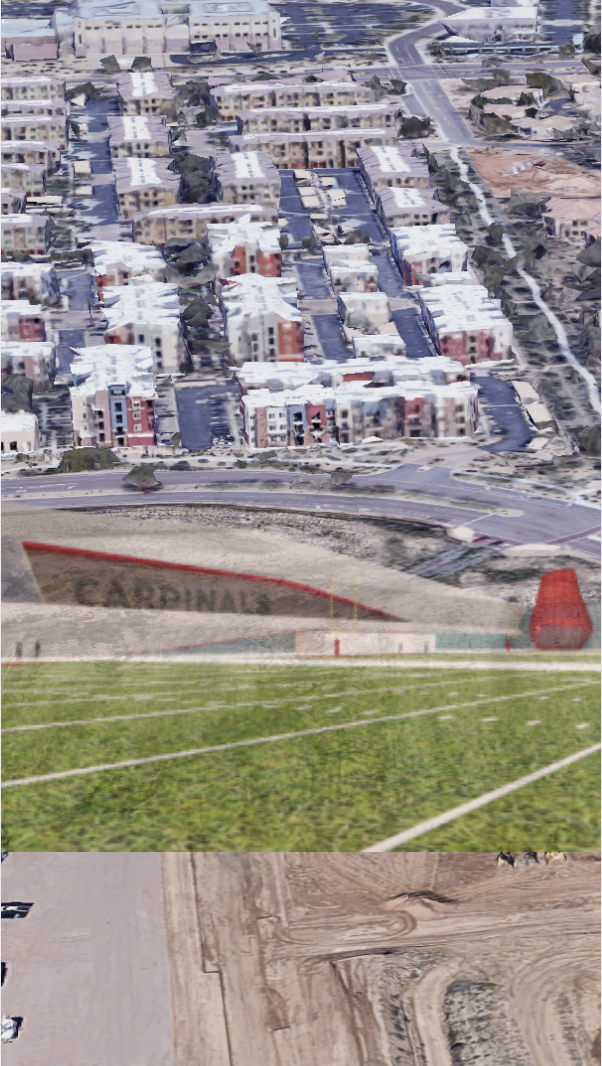 Arizona Cardinals’ $136 Million “Headquarters Alley” Project: How a 217-Acre Deal Will Redefine North Phoenix by 2028
 Public Safety as an Asset Class: The New Scottsdale AdvantageIn today’s Smart City economy, safety isn’t simply about peace of mind—it’s becoming a measurable, marketable asset class. Scottsdale is proving that public safety can be engineered into the fabric of
 Scottsdale, Chandler, Gilbert, and Peoria all landed within the top 10 U.S. metros—celebrated for rental affordability, job access, lifestyle quality, and even renter protectionsArizona’s East Valley has quietly emerged as a standout for renters, with Scottsdale, Chandler, Gilbert, and Peoria all landing among the top 10 U.S. metro areas in WalletHub’s 2025 “Best & Worst
 Nice to meet you! I’m Katrina Golikova, and I believe you landed here for a reason.
I help my clients to reach their real estate goals through thriving creative solutions and love to share my knowledge.