On June 24, 2025, Maricopa County Board of Supervisors adopted a zoning amendment streamlining approvals for mixed-use and high-density multifamily developments within transit corridors, notably along Central Phoenix, Tempe, and Mesa. The regulatory change reduces conditional use permit timelines by up to 40 days and introduces density bonuses for incorporating renewable energy or affordable units. This framework increases certainty for institutional portfolios and supports urban-infill wealth management strategies. Property tax implications center on the shift from commercial to higher-density residential assessments, which can affect long-term cash flow models. Future-proof development is further supported by new requirements for gigabit-ready digital infrastructure in all new multifamily projects.

The Cromford Market Index for Metro Phoenix registered 103.4 as of July 2025, indicating a technically balanced market with neither buyers nor sellers holding clear leverage. Transaction volumes for luxury properties ($2M+) were flat year-over-year, while inventory in the $800K–$1.5M bracket rose 14%. For high-net-worth portfolios, balanced markets enable strategic repositioning or phased asset liquidation with minimized slippage. Steady fundamentals support reliable property tax planning and smooth transitions for 1031 exchanges or stepped-up basis events. No major legislative shifts are expected this quarter, but ongoing review of HOA disclosure rules may affect due diligence timelines. Long-term value is underpinned by sustained population inflows and expanding digital infrastructure initiatives in Chandler and Peoria.
On July 1, 2025, the Arizona State Legislature passed HB2830, reducing the primary property tax assessment ratio for residential property from 10% to 9.2% for the 2026 tax year. The measure, supported by the Arizona Association of Realtors, is projected to lower average annual tax bills by 4–6% across Maricopa and Pinal Counties, directly enhancing after-tax returns for property holders and trusts. For wealth management, this regulatory shift boosts net yield potential, particularly for family offices and estate structures. The legislation introduces compliance checkpoints for homestead exemptions and strengthens anti-fraud oversight. From a long-term value angle, the adjustment could modestly improve affordability and transaction volume without destabilizing municipal revenue bases. The bill is also designed to offset fiscal impacts via targeted allocations to smart infrastructure funds statewide.
Tucson saw a 2.6% year-over-year increase in median home values as of June 2025, according to Redfin’s Arizona dashboard, while net migration remains positive at +7,200 residents annually per Census estimates. This growth supports its transition from undervalued to stabilizing market, especially in north Tucson and Oro Valley submarkets. From a tax strategy perspective, sharply rising values can affect property reassessments under Arizona's limited property value (LPV) cap rules. With its relatively lower median age (33.4 years), Tucson remains a magnet for remote workers, and its adoption of citywide smart water metering bolsters sustainability credentials.
The Bureau of Labor Statistics reports the Phoenix-Mesa Consumer Price Index rose 3.4% annually through May 2025, down from 6.2% in mid-2023. However, shelter costs, which make up over 30% of the index, increased 5.1% year-over-year—outpacing national averages. This divergence pressures renters, limits purchasing power, and influences real estate investment timelines. For portfolios with inflation-hedged strategies, housing-linked instruments remain advantageous. Property tax structures lag CPI but may be indirectly affected by income-sensitive owner appeals. Legislators are monitoring cost-of-living inputs for state housing aid. Future-proof valuation depends on navigating inflation trends, particularly as energy and insurance components decelerate.
Maricopa City is experiencing rapid growth in both infrastructure and residential development, with several new road and utility projects underway. Residential permit volume is up 11% YOY, driven by the affordability and high-quality masterplanned options in the area. The city’s investment in digital infrastructure and smart-city services is enhancing its appeal to tech-savvy buyers. Tax rates remain competitive, and the city’s planning department is focused on managing growth in a sustainable manner.
Tucson posted a median home price of $356,000 in August 2025, increasing 5.1% year-over-year, while inventory remains near 3.1 months of supply. Job growth in the metro stood at 2.7%, led by aerospace manufacturing and bioscience labs, underpinning long-term housing demand. For portfolio managers, Tucson offers relative affordability compared to Phoenix, diversifying geographic exposure. Pima County’s property tax rolls reflect modest upward pressure, important for estate planning. Local regulations on water assured-supply designations are reshaping developer obligations in peripheral communities. Tucson’s 20-year population projection points to 15% growth, ensuring sustained demand, while sustainability efforts include expanded solar adoption across municipal buildings, reinforcing environmental resilience.
Tempe and Mesa are at the forefront of smart-city transformation, leveraging public-private partnerships to advance sustainable mobility, water management, and digital infrastructure. Both cities have adopted aggressive green building codes and have implemented solar incentive programs for residential and commercial assets. Wealth advisors highlight the ESG credentials and lower operating costs for sustainable properties in these locales. State and local tax credits for solar and energy-efficiency retrofits remain available, enhancing investment returns. Regulatory priorities include traffic congestion mitigation, affordable housing, and infrastructure resilience, which are critical for long-term economic stability. These efforts align with investor demand for future-proof, climate-resilient real estate holdings.


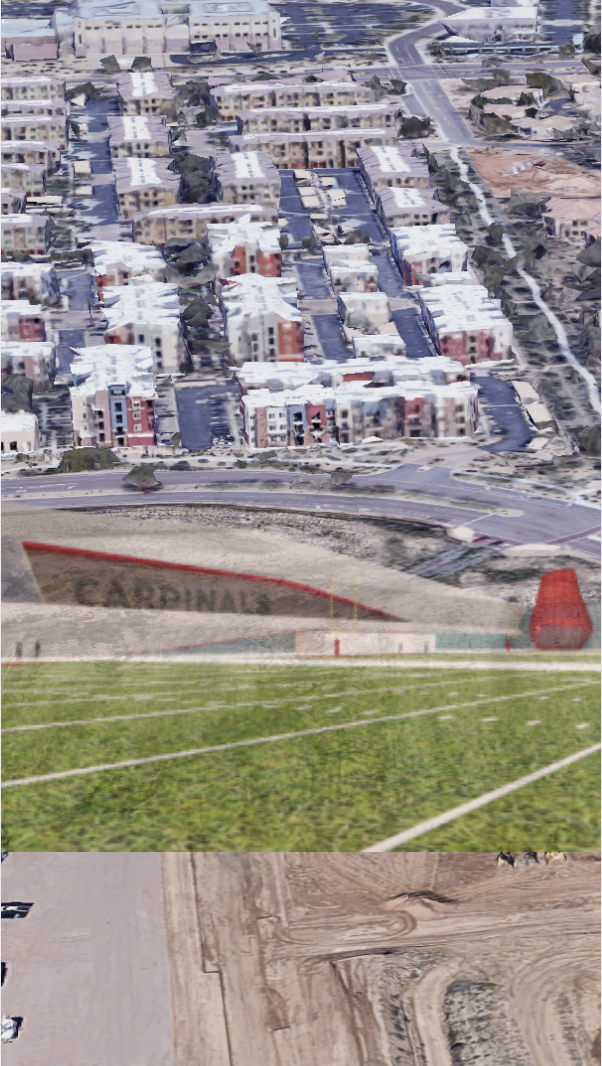 Arizona Cardinals’ $136 Million “Headquarters Alley” Project: How a 217-Acre Deal Will Redefine North Phoenix by 2028
 Public Safety as an Asset Class: The New Scottsdale AdvantageIn today’s Smart City economy, safety isn’t simply about peace of mind—it’s becoming a measurable, marketable asset class. Scottsdale is proving that public safety can be engineered into the fabric of
Nice to meet you! I’m Katrina Golikova, and I believe you landed here for a reason.
I help my clients to reach their real estate goals through thriving creative solutions and love to share my knowledge.