India’s Smart Cities Mission, running from 2015 to 2025, involves US$20+ billion in funding for 100 cities, delivering projects in smart water, transport, and governance. Thousands of initiatives are underway, including sensor-based safety systems. For investors, this mission introduces scalable opportunities in infrastructure-backed wealth preservation. Tax incentives, including exemptions for specific public–private partnerships, make entry more favorable. With privacy policies evolving, data rights remain under active debate. The program’s wide scope positions Indian urban real estate as an enduring value anchor tied to sustainability.

In February 2025, planners tabled the Anthem East preliminary plat in Florence for additional revisions, with developers indicating a shift from 3,290 to ~3,137 lots at ~3.37 units/acre on ~983 acres near Hunt Highway and Felix Road; the action illustrates current scrutiny on circulation, infrastructure, and density balance at the master-planned community’s edge. For wealth holders, timeline extensions alter absorption and carry-cost assumptions. Tax revenue timing similarly shifts with delivery cadence. Regulatory oversight remains focused on phasing, traffic, drainage and General Plan alignment. Value stability remains supported by established amenities in the core while new phases are sequenced. Smart-growth elements involve coordinated arterials, utilities and open-space networks.


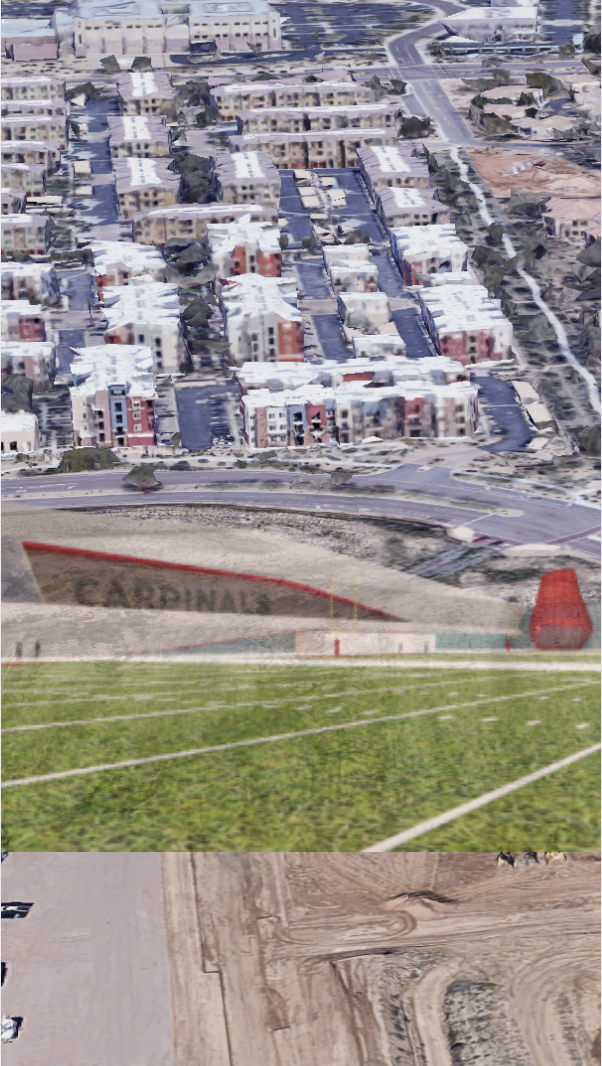 Arizona Cardinals’ $136 Million “Headquarters Alley” Project: How a 217-Acre Deal Will Redefine North Phoenix by 2028
 Public Safety as an Asset Class: The New Scottsdale AdvantageIn today’s Smart City economy, safety isn’t simply about peace of mind—it’s becoming a measurable, marketable asset class. Scottsdale is proving that public safety can be engineered into the fabric of
Nice to meet you! I’m Katrina Golikova, and I believe you landed here for a reason.
I help my clients to reach their real estate goals through thriving creative solutions and love to share my knowledge.