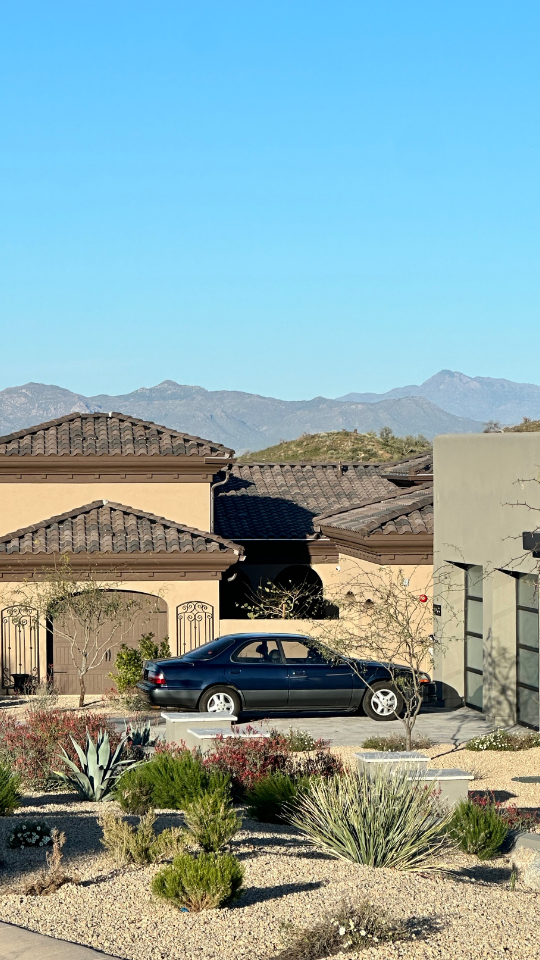
Chandler has reached 88% build-out capacity, Gilbert 82%, and Mesa 76%, with August 2025 records showing a 7% year-to-date decline in residential building permits. This signals a shift toward strategic infill projects and adaptive reuse, such as Chandler’s repurposing of vacant retail centers into mixed-use hubs. For wealth portfolios, this reduces reliance on raw land appreciation and emphasizes redevelopment premiums. Tax considerations include recalibrated valuations from adaptive reuses that may alter depreciation schedules. Arizona’s HB2110 on accessory dwelling units is expected to influence smaller-lot redevelopment viability. Long-term stability in these cities is supported by job diversity and strong demographic inflows, while smart-city initiatives, such as Gilbert’s expansion of fiber-optic broadband, support sustainable community growth.

Through Q1 2025, aggregate single-family home prices in Greater Phoenix have declined about 6.9 % from their peak in July 2022; in Q4 2024 to Q1 2025 the drop was ~1.25 %. Despite this pullback, average home values are still about 53.6 % higher than in 2019, reflecting strong long-term growth. Mortgage interest rates remain high—average 30-year fixed rates around 6.82 % in May 2025—putting a drag on affordability. (Common Sense Institute) For wealth planning, this means holdings purchased at earlier highs may see downward mark pressure, though real long-term equity gains remain. In tax terms, downward reappraisals could relieve some property tax burdens (if jurisdictions adjust). Legislatively, municipal oversight bodies are watching such declines to consider incentive adjustments, fee relief, or moratoria. Regarding value resilience, homes in well-amenitized, transit-proximate corridors may see slower declines. From a smart-city angle, markets investing in mobility, connectivity, and energy efficiency may outperform in this environment.
Recreation Centers of Sun City’s September 2025 bulletin highlights capital upgrades at Fairway Center and other facilities as part of ongoing asset stewardship. Prior local reporting noted annual assessment increases in 2023–2025 to sustain reserves and operations, and a 2025 board item addressed higher insurance premiums tied to market conditions. For wealth planning, HOA-like dues and recreation assessments influence holding costs. On taxes, stable amenity operations help sustain area values and retail activity. Regulatory context involves corporate board governance and compliance with county codes. Value stability in Sun City is linked to amenity reliability and lifecycle maintenance. Smart-city angles include lighting, shade, and energy-efficiency retrofits in recreation assets.
The Recreation Centers of Sun City West provide detailed FY25–26 budget materials showing dues, fee schedules, and program costs, supplementing a public capital-projects dashboard listing current-year work at RH Johnson, Beardsley, Kuentz, and Palm Ridge. Documents show incremental fee adjustments and transparent cost lines for bowling and other amenities, signaling cost-recovery discipline. Wealth managers should incorporate dues trajectories into operating budgets. Taxes are indirectly supported by area vitality and household spending. Regulatory environment is corporate governance plus Maricopa County standards. Value stability follows well-maintained amenities and steady dues policy. Smart-city alignment includes energy retrofits and digital work-order tracking.
The Town of Florence posted Planning & Zoning Commission agendas and packets for September 18, 2025, reflecting regular case intake and public hearings following earlier 2025 actions to adjust plats and phasing in large communities east of Hunt Highway. While individual outcomes vary, consistent calendaring indicates steady entitlement throughput. Wealth perspectives consider timing and phasing risks in outer-suburb product. Tax timing is tied to final plat, horizontal work, and CO delivery. Regulatory processes emphasize drainage, circulation, and general plan consistency. Value stability improves with coordinated infrastructure. Smart-growth considerations include open space, trails, and connected arterials.
The city’s development-activity page shows ongoing single-family and multifamily permit trends and COs issued, reflecting continued population gains; the Permit Center provides one-stop intake and lifecycle support. August 25, 2025 notices outline proposed text amendments revising City Code §18 and Subdivision Code §17, signaling on-the-ground policy adjustments. Wealth strategies benefit from transparency on pipeline and timelines. Tax base deepens with rooftops and retail pads. Regulatory agility is visible in frequent code updates. Values hold where arterial and school investments keep pace. Smart-city practices include dashboards and e-permitting.
Both Sedona and Prescott see ~48–50% of luxury sales executed in cash, reflecting investor confidence and reduced financing risk. Sedona’s tighter licensing and fee structures limit rental income potential but reduce oversupply risk—supporting value stability. Prescott has not adopted similar STR restrictions, which may favor rental flexibility but carry market perception risk. Continued allocation of municipal funding toward wildfire mitigation, defensible-space mapping, and enhanced water infrastructure boosts insurability and fortifies long-term equity. Favorable primary-residence tax assessments, combined with limited new levies and no major state tax shifts, support portfolio viability. Regulatory clarity around rentals ensures better forecasting of net yields and compliance cost structures. Both communities are prioritizing environmental resilience and infrastructural sustainability—key criteria in modern wealth preservation and generational asset transfer strategies.
Two new Arizona state laws—HB 2720 (permitting up to three backyard casitas on single‑family parcels) and HB 2297 (“adaptive reuse” of commercial properties to multifamily apartments)—have been enacted, significantly limiting Scottsdale’s local zoning control. From a wealth‑management perspective, these changes may unlock previously inaccessible development corridors, diversifying future cash‑flow assets. However, owners in affected neighborhoods must consider potential changes in property assessments and municipal tax bases. These laws reflect legislative shifts curtailing municipal discretion—a trend that may affect regulatory risk models. Adaptive‑reuse projects often integrate smart‑city infrastructure, such as fiber and EV charging, enhancing the long‑term durability of urban assets.


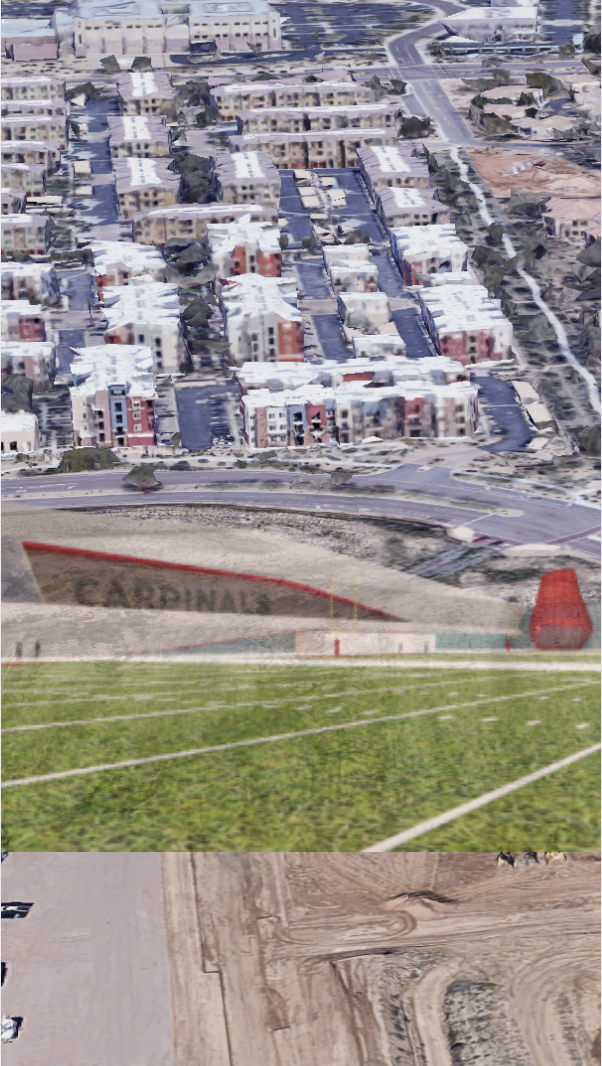 Arizona Cardinals’ $136 Million “Headquarters Alley” Project: How a 217-Acre Deal Will Redefine North Phoenix by 2028
 Public Safety as an Asset Class: The New Scottsdale AdvantageIn today’s Smart City economy, safety isn’t simply about peace of mind—it’s becoming a measurable, marketable asset class. Scottsdale is proving that public safety can be engineered into the fabric of
Nice to meet you! I’m Katrina Golikova, and I believe you landed here for a reason.
I help my clients to reach their real estate goals through thriving creative solutions and love to share my knowledge.