Phoenix’s divergence suggests more resilient local fundamentals—migration, job growth, and supply constraints. Nationally, median home prices were down ~0.6 % and pending sales were collapsing ~31 %, indicating broader weakness. The relative strength tempers downside risk in Phoenix-centric holdings. From tax revenue projections, this resilience helps sustain municipal forecasts. Policymakers may point to this in justifying infrastructure or housing policy. For value stability, the local cushion provides greater breathing room than many other U.S. markets.

Casa Grande and Maricopa City are experiencing a surge in demand from buyers seeking more affordable masterplanned options, with homes often priced in the $350,000 to $450,000 range. Pinal County GIS data indicates a steady stream of new subdivision plats being filed, reflecting long-term confidence in the region’s growth. Wealth managers see these markets as accessible entry points for real estate diversification, especially as major manufacturing projects bring new jobs to the area. Local tax rates remain a draw for both primary residents and investors, while city policies focus on ensuring adequate utility capacity for future residents. Smart-city initiatives in Pinal County are increasingly focused on sustainable land use and digital infrastructure for new developments.
Buckeye, the fastest-growing city in the U.S. by percentage growth according to the Census Bureau, is pushing forward on major expansions within Verrado and Tartesso masterplanned communities. With over 1,000 building permits issued in the last 12 months and home prices averaging $449,000 (ARMLS), the city’s infrastructure investments—spanning water rights allocations and loop road expansions—are attracting attention from institutional investors. Tax districts within these communities offer partial financing for amenities, creating implications for bond-based estate planning. Solar-ready building codes and high-efficiency water standards further align these projects with ESG-driven portfolio requirements.
According to the latest ARMLS STAT report, the median sales price in Phoenix rose 3.7% year-over-year in May 2025, reaching $472,000, while active inventory remains 12% lower than last spring. This reflects sustained equity retention for wealth portfolios. Homeowners should note property tax valuations will likely adjust upward, reinforcing the importance of homestead exemptions. Legislative discourse continues around reassessment caps. These stable fundamentals support conservative wealth preservation strategies and align with energy-efficient building code adoption trends citywide.
Prescott’s premier masterplans—Prescott Lakes and Deep Well Ranch—continue to attract high-net-worth buyers seeking altitude-driven climate relief and year-round golf access. Deep Well Ranch alone is set to deliver over 5,000 new homes by 2030, with 1,100 units already approved in its next construction phase. Median new home prices exceed $740,000 (Cromford Report), with cash transactions dominant. Yavapai County’s low millage rate and minimal special assessment districts support tax-advantaged portfolio structuring. The city’s participation in the Verde River Watershed conservation partnership adds long-term ecological value.
New single-family subdivision permits in Mesa increased 18% year-to-date, per Maricopa County’s GIS and Mesa’s P&D Services portal. This surge supports regional housing supply goals. Wealth managers may assess how suburban migration impacts rental yields. Tax assessments for new builds will lag issuance, offering a temporary window for tax-efficient entry. Regulatory focus on water-neutral development ensures long-term viability for these new neighborhoods.
Scottsdale’s Active Cases portal shows a 21% uptick in mixed-use rezoning requests in the first half of 2025, with developers clustering near Old Town and the McDowell Corridor. This signals diversified income streams for local investors. Higher-density allowances may alter mill rate calculations for owners. Recent city council sessions emphasized sustainable transit links and walkability enhancements, which bolster long-term asset desirability in these districts.
Phoenix has launched a $12 million smart traffic signal pilot on Bell Road, using AI to reduce congestion and emissions. Nearby commercial landlords may benefit from improved access flows. Local taxpayers partially fund the project via transportation bonds. The initiative exemplifies the city’s broader resilience and sustainability blueprint, positioning adjacent corridors as premium retail and mixed-use targets.


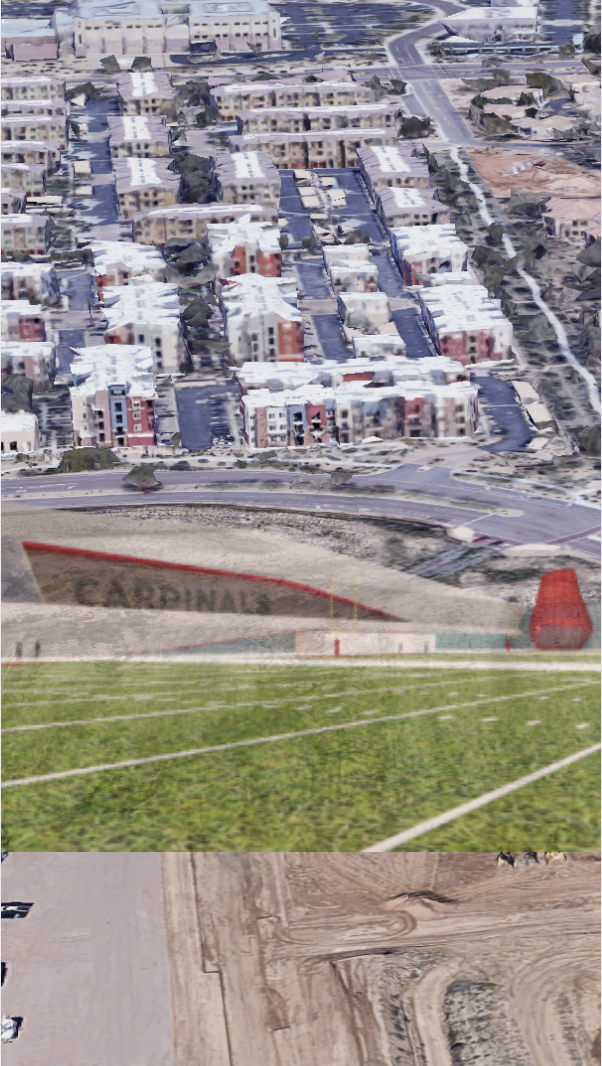 Arizona Cardinals’ $136 Million “Headquarters Alley” Project: How a 217-Acre Deal Will Redefine North Phoenix by 2028
 Public Safety as an Asset Class: The New Scottsdale AdvantageIn today’s Smart City economy, safety isn’t simply about peace of mind—it’s becoming a measurable, marketable asset class. Scottsdale is proving that public safety can be engineered into the fabric of
Nice to meet you! I’m Katrina Golikova, and I believe you landed here for a reason.
I help my clients to reach their real estate goals through thriving creative solutions and love to share my knowledge.