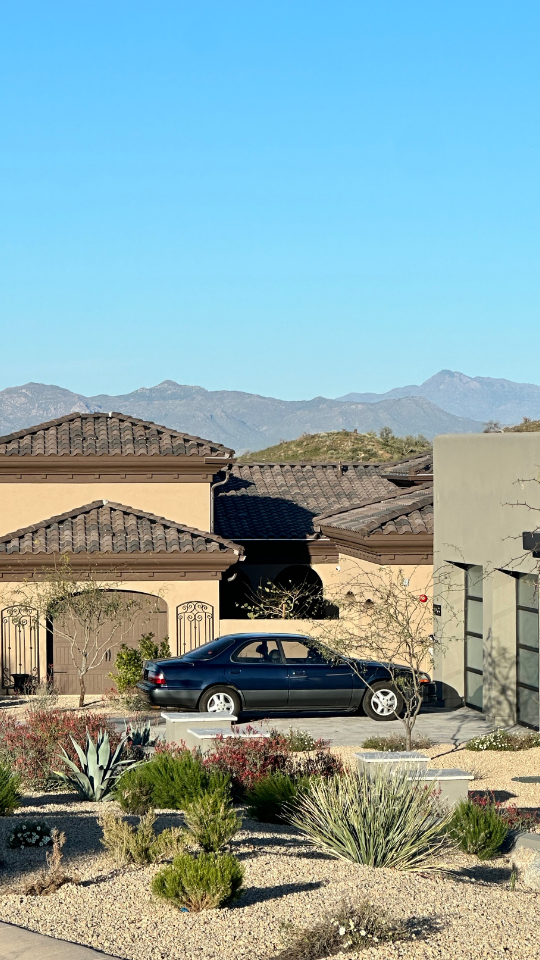
Phoenix’s divergence suggests more resilient local fundamentals—migration, job growth, and supply constraints. Nationally, median home prices were down ~0.6 % and pending sales were collapsing ~31 %, indicating broader weakness. The relative strength tempers downside risk in Phoenix-centric holdings. From tax revenue projections, this resilience helps sustain municipal forecasts. Policymakers may point to this in justifying infrastructure or housing policy. For value stability, the local cushion provides greater breathing room than many other U.S. markets.

Tucson has introduced a new sustainability overlay for its masterplanned communities, requiring higher levels of water and energy efficiency. The policy aims to reduce the environmental footprint of new developments while enhancing their long-term resilience. Wealth managers see this as a positive step for property value preservation, as buyers increasingly prioritize sustainability. Pima County’s tax incentives for green building further support these efforts.
Recent City of Phoenix data show that, over the past 12 months, Phoenix issued more than 18,400 residential building permits, a figure outpacing all other Arizona metros. This robust permit velocity—tracked daily and via FRED—reflects a renewed builder confidence, with a 7-day rolling issuance often exceeding 350 permits. Wealth managers see this as a signal of future asset expansion, while increased supply may buffer property tax bases and ease affordability concerns over time. City leadership’s push for green infrastructure and digital permitting aligns with smart-city trends, supporting both long-term value stability and ESG investment mandates.
Anthem, the North Valley’s foundational masterplanned community, has initiated a town core revitalization plan under Maricopa County’s updated 2025 planning framework. The project aims to add 450 luxury units and expanded medical-professional space, supported by $15 million in municipal-private partnerships. From a wealth management perspective, this reinvestment ensures the community’s resilience against aging infrastructure—a key factor in maintaining high property value. The revitalization will include smart-lighting systems and reclaimed water upgrades, consistent with Arizona’s new sustainable urbanism standards. Tax implications remain favorable, as the project leverages existing community facilities without requiring new general levies.
The West Valley’s masterplanned communities—led by Tartesso and Verrado—continue to benefit from industrial job creation in the Loop 303 corridor. Buckeye issued over 950 single-family permits in the first five months of 2025, with a focus on "work-live-play" masterplans. These developments often utilize Community Facilities Districts (CFDs) to fund large-scale amenities, which wealth advisors view as a stable mechanism for maintaining community standards without drastic tax spikes. Recent state legislation (SB 1432) has also streamlined the "Assured Water Supply" process for these West Valley hubs, removing regulatory bottlenecks that previously slowed development. Smart-city features, such as automated traffic management and public Wi-Fi in community parks, are being rolled out as standard features.
Chandler is now estimated to be 88% built-out, according to city development data. While new construction slows, the city has repurposed more than 350,000 square feet of former retail into adaptive residential and mixed-use formats, highlighting its redevelopment maturity. For portfolio managers, Chandler’s high owner-occupancy rate (over 68%) signals long-term community retention and pricing stability. The city’s zoning flexibility and adaptive reuse incentives dovetail with ESG mandates and tax credit programs, such as federal LIHTC overlays for senior and affordable units. Chandler also maintains one of the highest broadband penetration rates in Arizona, bolstering smart-workforce viability.
Casa Grande is seeing a pivot toward more diverse masterplanned offerings as it absorbs demand from the semiconductor and EV sectors. New phases in the Villago and Mission Royale communities are targeting both workforce and executive demographics. According to Pinal County’s Q2 2025 development report, residential land sales in Casa Grande have increased by 15% year-to-date. Tax-wise, Pinal County offers a lower overall assessment baseline than Maricopa, making it an attractive destination for long-term wealth accumulation. The city’s updated stormwater management ordinance ensures that new masterplanned clusters are resilient against extreme weather events, preserving insurance eligibility and long-term property value.
Laveen’s active projects—such as the Vistas at South Mountain and Dobbins Point expansions—have attracted over $250 million in investment backed by Opportunity Zone capital. Maricopa County issued 792 permits in South Phoenix in the last two quarters, a 13% increase YoY. The City of Phoenix has expanded density allowances for transit-oriented developments (TODs) along the South Central light rail extension. These TODs integrate workforce housing with masterplanned amenities and gigabit broadband infrastructure. Wealth advisors may note that such projects offer long-term rent appreciation potential and federal capital gains tax deferral under IRC §1400Z-2.


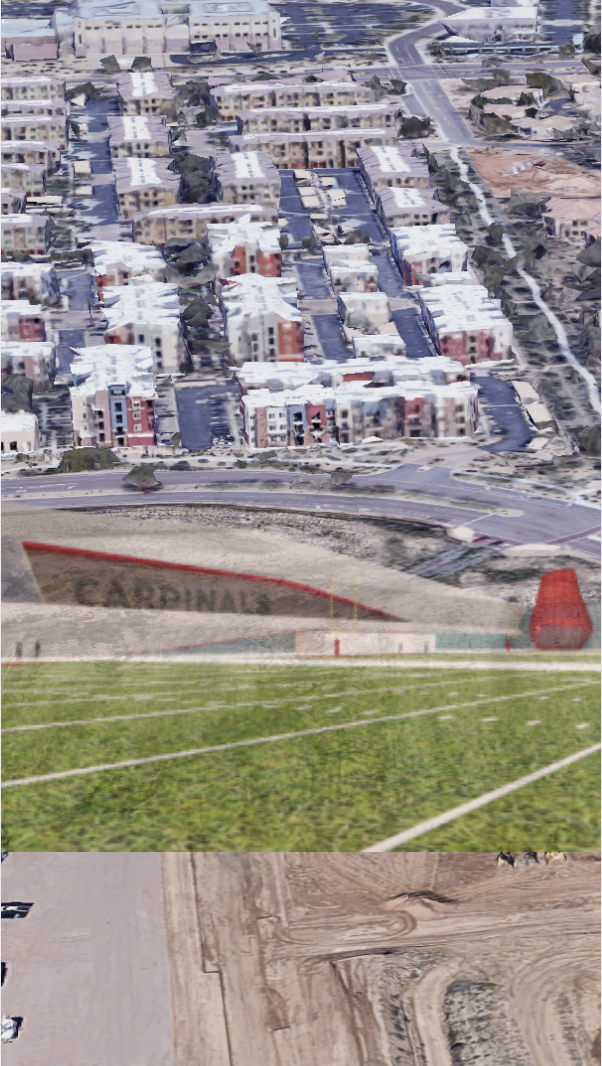 Arizona Cardinals’ $136 Million “Headquarters Alley” Project: How a 217-Acre Deal Will Redefine North Phoenix by 2028
 Public Safety as an Asset Class: The New Scottsdale AdvantageIn today’s Smart City economy, safety isn’t simply about peace of mind—it’s becoming a measurable, marketable asset class. Scottsdale is proving that public safety can be engineered into the fabric of
 Adobe-Inspired Wall Finishes: Reviving historic textures with clay plasters and natural limewash tones for modern contextsAcross cities like Santa Fe, Tucson, and Albuquerque, there is a renewed appreciation for adobe-inspired finishes—wall treatments that reconnect modern living with the deep cultural lineage of clay
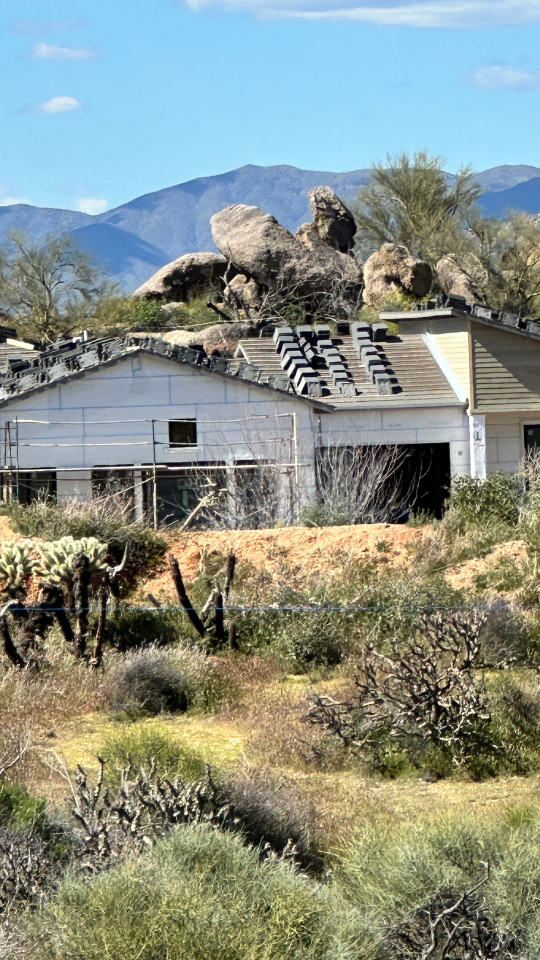 Why Home Quality Can Vary Drastically Within The Same Community — And How To Protect Your InvestmentAcross Arizona’s fast-growing residential corridors, from North Scottsdale’s luxury enclaves to Mesa’s master-planned communities, buyers are finding an unexpected challenge: not all homes in the same
Nice to meet you! I’m Katrina Golikova, and I believe you landed here for a reason.
I help my clients to reach their real estate goals through thriving creative solutions and love to share my knowledge.