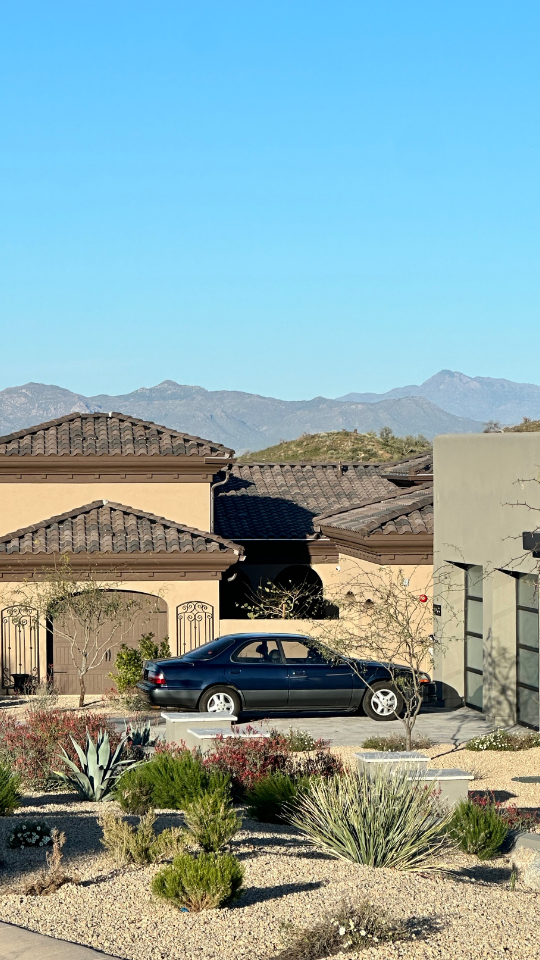
Phoenix’s divergence suggests more resilient local fundamentals—migration, job growth, and supply constraints. Nationally, median home prices were down ~0.6 % and pending sales were collapsing ~31 %, indicating broader weakness. The relative strength tempers downside risk in Phoenix-centric holdings. From tax revenue projections, this resilience helps sustain municipal forecasts. Policymakers may point to this in justifying infrastructure or housing policy. For value stability, the local cushion provides greater breathing room than many other U.S. markets.

Laveen and South Phoenix are seeing new masterplanned developments that leverage the expansion of the light rail. These projects integrate residential and commercial uses with high-speed transit, appealing to a diverse range of buyers. Phased land release and municipal tax incentives make these projects attractive for long-term investment. Sustainability requirements and open-space allocations are built into approvals, reinforcing enduring value.
On July 18, 2025, the state authorized the inaugural legal transfer of water from a rural basin into an Active Management Area, allowing Buckeye to pump nearly 6,000 acre-feet from Harquahala to serve more than 17,000 homes over a 110-year horizon; the decision marks a pivotal tool for West Valley supply under growth pressure and AMA constraints. For wealth portfolios, this expands long-run feasibility in key master-planned corridors. Tax bases broaden as rooftops deliver. The regulatory context will monitor conveyance infrastructure, conservation, and service-area integration. Value stability improves where supply certainty is demonstrable. Smart-water strategy includes conveyance efficiency and advanced metering.
In August 2025, Payson’s median sale price was $436,492 (-11.6% YoY) with 111 median days on market and 39 sales. Show Low’s median was $465,000 (-12.7% YoY) with 80 days on market and 52 sales. In ZIP 85541, the median was $433,000 (-14.9% YoY) with 65 days on market, while ZIP 85901 printed $465,000 (+5.4% YoY) with 59 days. Nearby, Sedona registered a $899,000 median (-1.3% YoY) and 48 days on market, whereas Prescott posted $625,000 (+4.2% YoY) and 75 days. Gila County’s calendar sets first-half property taxes due October 1 and second-half due May 1, supporting cash-flow plans. Payson advanced WUI structure-hardening code amendments in 2025, highlighting wildfire resilience priorities. Show Low maintains active wildfire-mitigation programs and lifted seasonal restrictions on July 25, 2025. Firewise USA® and FEMA’s April 2025 best-practice guidance inform defensible-space and subdivision design. Arizona media report rising insurance pressures in higher-risk WUI areas, a factor in underwriting and carry costs. Wealth planning weighs longer DOM against selective discounting and maintenance reserves. Tax timing remains standard across counties, aligning with portfolio cash cycles. Legislative and code updates on WUI bolster long-term asset protection and appraisability. Sustainability measures—hardening, fuel management, and water-wise design—are increasingly central to preserving value.
Gold Canyon, Fountain Hills, and Carefree remain characterized by constrained supply and high entry price points, supporting stable price appreciation despite broader market normalization. Limited new development opportunities and restrictive topography have resulted in low months-of-supply, with luxury segment listings often trading off-market. These areas benefit from strong owner-occupancy, providing a buffer against volatility and enhancing wealth preservation. Arizona’s property tax structure, along with local improvement districts, remains favorable for legacy and estate strategies. Regulatory focus on environmental protections and fire risk mitigation is increasing, with infrastructure investments aimed at safeguarding long-term livability and asset value.
Chandler and Glendale are actively pursuing both new development and adaptive reuse, with Chandler now 88% built-out and prioritizing infill and redevelopment of aging retail and industrial corridors. Median prices have stabilized near $530,000, with modest appreciation year-on-year. These dynamics create unique opportunities for investors skilled in value-add or repositioning strategies, while local property tax regimes offer predictability for long-term asset holders. Legislative initiatives emphasize transparency in rezoning and community input, reducing entitlement risk. Major infrastructure upgrades—including light rail extensions and broadband initiatives—reinforce both economic vibrancy and sustainability credentials.
Sun City and Sun City West continue to attract retirees and fixed-income buyers, but housing affordability has tightened, with median home prices rising 6% year-over-year and supply remaining historically low. Wealth managers highlight the importance of tax strategy, as Arizona’s property valuation freeze option benefits qualifying seniors. Regulatory shifts—such as new HOA transparency laws and enhanced consumer protections—provide additional clarity for long-term owners. As both communities approach full build-out, turnover rates have slowed, supporting price stability but limiting new acquisition opportunities. Ongoing investments in healthcare, public transit, and energy-efficient upgrades underpin their appeal for aging populations and align with sustainability best practices.
Maricopa County’s net migration remains strongly positive, with the latest MAG projections indicating sustained population growth of 1.8% annually through 2030. This migration trend is paired with job growth rates consistently outpacing the national average, supporting both rental and ownership demand across Peoria, Goodyear, Buckeye, and Surprise. For wealth planners, this underpins rental yield stability and underwrites portfolio risk mitigation. Property tax policy remains favorable, with the county’s secondary tax rates for bonds and overrides kept in check by state legislation. Economic development authorities continue to fast-track key infrastructure and employment projects, ensuring a healthy jobs-housing balance. The county’s progressive approach to solar and water infrastructure also supports resilience against climate-driven risks, enhancing long-term investment stability.


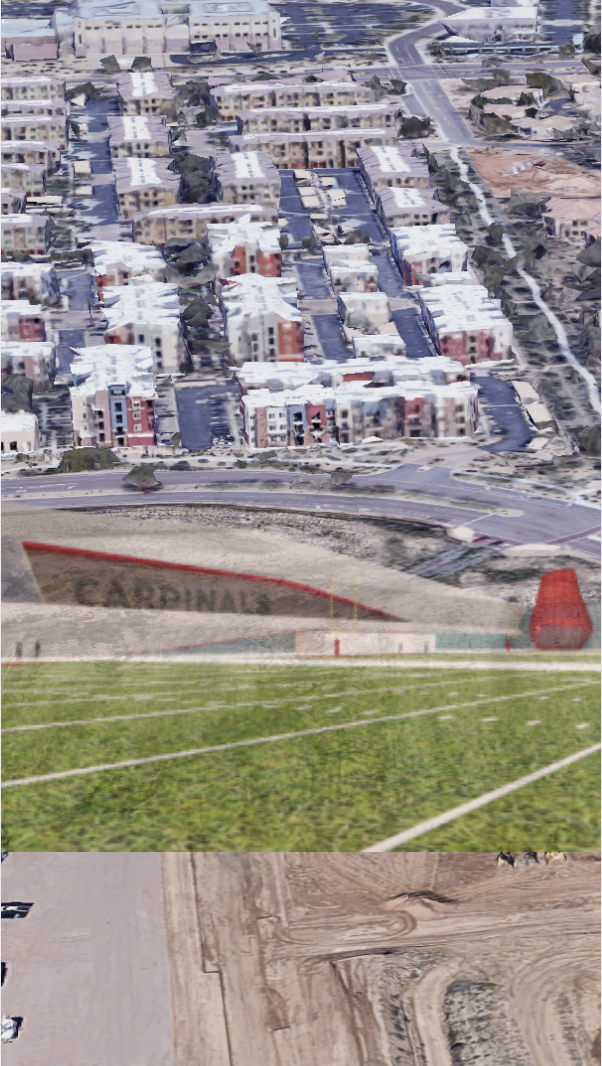 Arizona Cardinals’ $136 Million “Headquarters Alley” Project: How a 217-Acre Deal Will Redefine North Phoenix by 2028
 Public Safety as an Asset Class: The New Scottsdale AdvantageIn today’s Smart City economy, safety isn’t simply about peace of mind—it’s becoming a measurable, marketable asset class. Scottsdale is proving that public safety can be engineered into the fabric of
 How Masterplanned Communities Incorporate Child Safety FeaturesIn today’s era of rapid urban expansion, one of the most pressing conversations in housing is how masterplanned communities are designed with child safety at their core. With families representing
  Exploring Arizona’s Unique Land Ownership Laws: What Every Future Homeowner, Investor, And Relocating Professional Needs To KnowArizona’s real estate market is unlike any other in the American Southwest. While rapid population growth and migration trends have made Phoenix, Scottsdale, Mesa, and Tucson some of the fastest
Nice to meet you! I’m Katrina Golikova, and I believe you landed here for a reason.
I help my clients to reach their real estate goals through thriving creative solutions and love to share my knowledge.