India’s Smart Cities Mission, running from 2015 to 2025, involves US$20+ billion in funding for 100 cities, delivering projects in smart water, transport, and governance. Thousands of initiatives are underway, including sensor-based safety systems. For investors, this mission introduces scalable opportunities in infrastructure-backed wealth preservation. Tax incentives, including exemptions for specific public–private partnerships, make entry more favorable. With privacy policies evolving, data rights remain under active debate. The program’s wide scope positions Indian urban real estate as an enduring value anchor tied to sustainability.

Tucson’s Planning & Development Services adopted the 2024 International Building Codes with local amendments, allowing 2018 or 2024 codes through December 31, 2025 before full 2024 implementation on January 1, 2026, and concurrently approved a transparency and conservation ordinance compelling very large water users to submit detailed applications, plans and updates prior to service connections, with public review thresholds and enforcement tools. For wealth holders, clearer code horizons reduce design risk. Tax and fee structures align with infrastructure cost recovery. Regulatory positioning emphasizes water stewardship amid growth. Value stability in Tucson is increasingly tied to resilient water planning. Smart-city outcomes include demand management, reclaimed water use and data-rich oversight.
Glendale home prices were up 5.2% year over year in August 2025 with a $426,000 median and 66 days on market as 171 homes sold. Peoria’s median was $491,188, down 6.4% year over year, with 83 days on market and 234 sales. Avondale recorded a $415,000 median, down 1.6% year over year, with 70 days on market and 83 sales. Litchfield Park’s median was $500,000, down 9.5%, with 79 days on market and 11 sales. El Mirage’s median was $347,500, down 2.8%, with 54 days on market and 20 sales. Maricopa County’s median was $474,990, down 1.0%, with 71 days on market and 4,538 sales. Wealth managers will note the county’s overall property tax rate edged down to 1.348 in FY 2026, modestly lowering carrying costs. The 30-year mortgage rate near 6.35% improves qualifying power versus earlier in 2025. ADWR’s 2024 Phoenix AMA model continues to limit new assured water supply determinations based on groundwater, shaping entitlement risk. Legislative debate over “starter homes” standards (SB1229/HB2371) underscores design-standard preemption risks cities are monitoring. Buyers gained leverage as national listings outpaced demand this summer. Price discovery is visible in ZIP-level splits such as 85305 in Glendale nearly flat year over year and 85383 in north Peoria slightly positive. For tax planning, Maricopa’s Truth-in-Taxation notices outlined levy dynamics prior to the adopted rate. For value stability, submarkets with diversified product and employment access tend to show steadier absorption. Smart-city investments continue across West Valley corridors, complementing infill and arterial upgrades. The area’s median price remains below Scottsdale and Paradise Valley, preserving move-up potential. Cash offers remain present but less dominant than in 2022. Investor share has normalized relative to pandemic peaks, reducing bidding volatility.
Arizona House Bill 2110, effective September 2025, requires cities to allow accessory dwelling units (ADUs) on most single-family lots statewide, overriding restrictive municipal codes. Scottsdale, Paradise Valley, and Tempe are currently revising local ordinances in response. This reform enhances future-proof use flexibility for high-value parcels, particularly in aging neighborhoods with strong utility infrastructure. Wealth portfolios benefit from increased densification and the potential for multi-unit rental income on previously single-family lots. Tax assessments for these parcels may adjust upward based on additional square footage, but state caps on primary residence valuations offer protection for long-term owners. Smart-city advocates see ADUs as a key tool for promoting walkable, high-density urban infill without requiring major new road construction.
Despite broader market cooling, high-end enclaves like Paradise Valley and Arcadia continue to see median sales prices hold firm above $3.5 million. ARMLS data shows that luxury inventory remains tight, with many owners opting for long-term holds over selling into a high-interest-rate environment. Wealth management professionals highlight the "safe-haven" status of these neighborhoods for preserving capital. Property tax assessments in these zones are among the highest in the state, but Arizona’s constitutionally capped valuation growth provides significant long-term protection. Regulatory efforts in these areas focus on maintaining low-density "rural-luxury" character while integrating modern sustainability tech like underground water storage and solar-shingle roofing.
Phoenix’s average days on market climbed in August 2025, with one report citing a move from 67 to 78 days month over month and 64 to 74 year over year, while the Housing Affordability Index printed 70, a level observed in most months this year, and new listings fell just under 10% in both monthly and annual comparisons, suggesting selective buyer activity amid rate headwinds. Wealth planning lenses see longer marketing times improving entry precision and negotiation room. Tax implications lean toward moderated assessed-value growth where resale pricing cools. Regulatory context includes ongoing local process streamlining for permits and approvals to sustain throughput. Value stability appears strongest around amenitized, transit-served submarkets. Smart-city considerations put walkability, EV readiness and shade infrastructure at a premium in buyer filtering.
In August 2025, Phoenix’s median sale price was $445,000, down 1.1% year over year, with a 64-day median to sell and 1,268 homes closed. In Ahwatukee 85048, the median was $609,000 (-0.16% YoY) with 66 days on market and 121 sales. In 85044, the median reached $488,500 (+0.7% YoY) with 64 days on market and 124 sales. In 85045, the median was $675,000 (+5.5% YoY) with 86 days on market and 30 sales. The Ahwatukee Foothills neighborhood printed a $545,000 median (-0.91% YoY) and 65 days on market. Laveen recorded a $447,952 median (-0.46% YoY), 69 days on market, and 232 sales. Tolleson posted a $377,000 median (+0.7% YoY) and 75 days on market. Mobility remains a strength: the 22-mile Loop 202 South Mountain Freeway links east and west valleys and introduced Arizona’s first half-DDIs. Phoenix now permits up to two ADUs per lot (and a third on larger lots under conditions), expanding gentle density. Maricopa County set its FY2026 overall property tax rate at 1.348 while Phoenix kept its primary city rate unchanged for 2025-26. First-half county property taxes are due October 1 and second-half due March 1. Nearly half of Phoenix listings were “stale” (60+ days) this spring, signaling slower absorption. Wealth management implications include extended negotiation windows without forcing loss-recognition for low-rate borrowers. Tax-relevant ADU income and depreciation may modestly alter cash-flow profiles where allowed. Statewide middle-housing and ADU bills advanced in 2024, shaping future infill beyond Phoenix. Long-run value resilience aligns with AMA water governance and safe-yield objectives. Smart-city and safety investments, including Vision Zero corridors and fiber/ITS expansions, reinforce neighborhood livability.
Gilbert now holds one of the Valley’s highest owner-occupancy rates at 72.3%, per 2023 ACS estimates, while housing turnover has slowed to under 4% annually. With over 90% of its land area built out, the town is transitioning toward vertical infill and luxury remodels. These dynamics suggest strong value stability for long-term holders and estate transfer planning. From a tax and governance perspective, Gilbert’s recent adoption of green infrastructure requirements for all civic developments signals long-term municipal planning discipline. Water usage per capita has declined 8% over five years, aligning with state conservation mandates and safeguarding future carrying capacity.


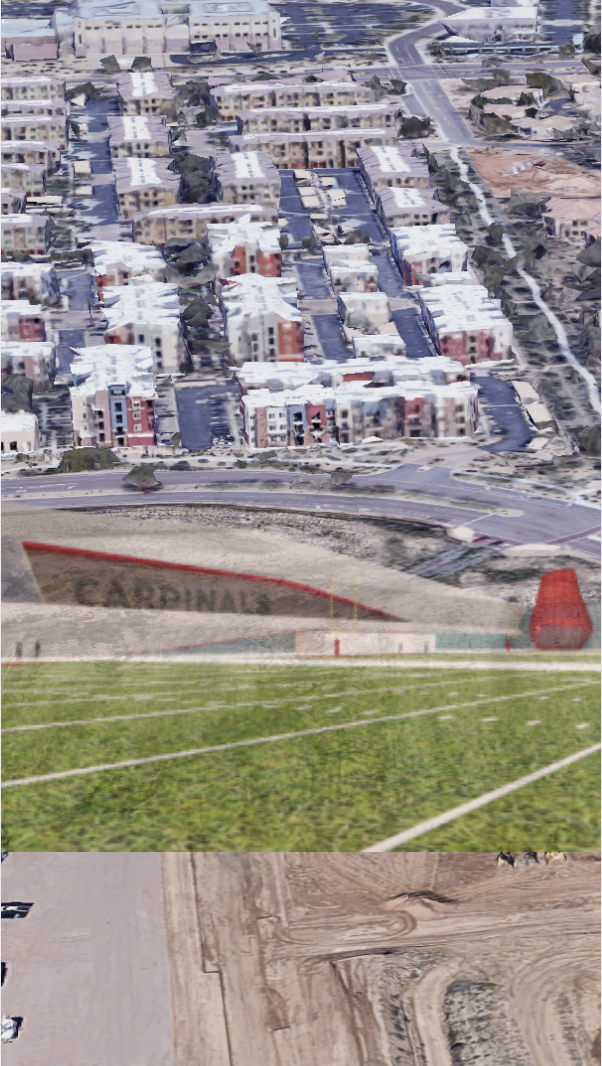 Arizona Cardinals’ $136 Million “Headquarters Alley” Project: How a 217-Acre Deal Will Redefine North Phoenix by 2028
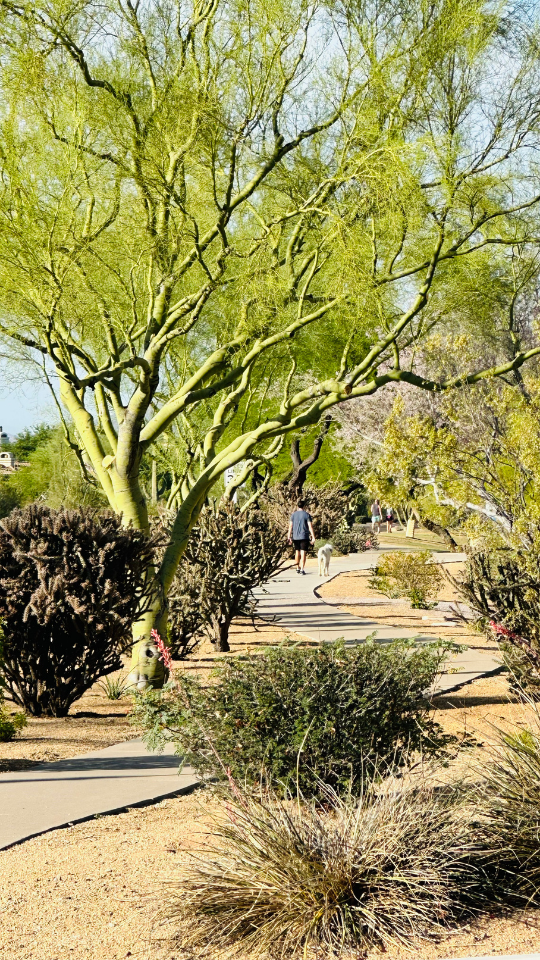 Public Safety as an Asset Class: The New Scottsdale AdvantageIn today’s Smart City economy, safety isn’t simply about peace of mind—it’s becoming a measurable, marketable asset class. Scottsdale is proving that public safety can be engineered into the fabric of
Nice to meet you! I’m Katrina Golikova, and I believe you landed here for a reason.
I help my clients to reach their real estate goals through thriving creative solutions and love to share my knowledge.