The Mattel Adventure Park in Glendale, adjacent to the VAI Resort, blends immersive attractions tied to brands like Barbie and Hot Wheels. It represents a large experiential, tourism-driven real-estate anchor. Nearby hospitality, retail, entertainment real-estate may see uplift from increased visitation traffic. Local jurisdictions will face infrastructure demands (roads, parking, utilities). From a regulatory angle, permitting and event zoning will be important. In value terms, properties in surrounding districts may see revaluation linked to visitor amenities and foot traffic.

Surprise’s 3,300-acre Prasada district, including the masterplanned Sterling Grove community, is seeing record-breaking retail and residential integration. With over $150 million in new commercial construction currently underway, the area is becoming a primary West Valley hub for high-net-worth households. Toll Brothers, the lead developer for Sterling Grove, reports sustained demand for luxury homes despite higher interest rates, with Q2 2025 closings up 12% YoY. Municipal zoning supports this growth via "Fast-Track" permitting for smart-home-equipped builds. Tax incentives for commercial anchors in Prasada help offset infrastructure costs, keeping residential property tax rates competitive.
Communities like Sterling Grove in Surprise and Alamar in Avondale are experiencing robust luxury segment absorption. According to Yardi Matrix’s Q2 2025 report, Surprise posted a 24.3% annual increase in new home sales over $600,000, the fastest among all submarkets in Maricopa County. These developments emphasize master HOA management and integrated smart grids, backed by APS's expanded Time-of-Use infrastructure. Municipal incentives for LEED-certified residential clusters are drawing high-net-worth investors focused on long-term asset resilience. Additionally, Surprise’s updated 2025 General Plan prioritizes "Smart Growth" corridors that bundle residential density with commercial tech-hubs, reducing regional commute times and enhancing property value stability.
Show Low continues to record strong absorption in new residential subdivisions, according to city records. These assets offer portfolio diversification and inflation resilience for wealth managers. Low property tax rates and recently adopted wildfire mitigation codes support enduring property value and climate risk mitigation.
Maricopa City has approved the Lakes at Maricopa, a 1,200-unit masterplan featuring advanced water-retention basins and a dedicated fiber-optic backbone. Simultaneously, Casa Grande is fast-tracking permits for the Mission Royale expansion, which includes over 500 new executive-style lots. These projects are designed to align with the Arizona Department of Water Resources (ADWR) 2025 sustainability guidelines, which reward developers for net-zero water impacts. For investors, these markets offer lower entry prices than the Scottsdale-Phoenix corridor, coupled with long-term infrastructure-backed value stability. Local property tax assessments in Pinal County remain steady, though officials are monitoring the impact of these large-scale builds on regional school district funding.
Casa Grande’s residential market is benefiting from the city’s emergence as a manufacturing hub, with masterplanned communities such as Villago and Mission Royale seeing increased activity. City planning officials report over 800 single-family units currently in the final plat stage. For wealth managers, Casa Grande offers a value-driven entry point into Arizona’s masterplanned landscape, with prices often 15-20% below the metro Phoenix average. The city’s participation in regional transportation initiatives and utility scaling ensures the infrastructure can support sustained growth. New construction increasingly features "Energy Star" certification and smart water monitoring.
Laveen’s active projects—such as the Vistas at South Mountain and Dobbins Point expansions—have attracted over $250 million in investment backed by Opportunity Zone capital. Maricopa County issued 792 permits in South Phoenix in the last two quarters, a 13% increase YoY. The City of Phoenix has expanded density allowances for transit-oriented developments (TODs) along the South Central light rail extension. These TODs integrate workforce housing with masterplanned amenities and gigabit broadband infrastructure. Wealth advisors may note that such projects offer long-term rent appreciation potential and federal capital gains tax deferral under IRC §1400Z-2.
In May 2025 GTI Energy announced a $33 million initial investment, with up to $20 million more, to open a 530,000-square-foot plant at Lakin Park serving renewable-energy and data-center markets; the city also promoted GSQ openings and sought master developers for a 58-acre Ballpark Village destination, signaling sustained west-Valley job and amenity growth. Wealth portfolios gain industrial diversification alongside retail placemaking. Tax receipts should rise with payroll, sales and property contributions. Regulatory processes are framed by economic-development targets. Value resilience improves with employer and amenity clustering. Smart-city elements include advanced manufacturing, EV-ready fleets and integrated district mobility.


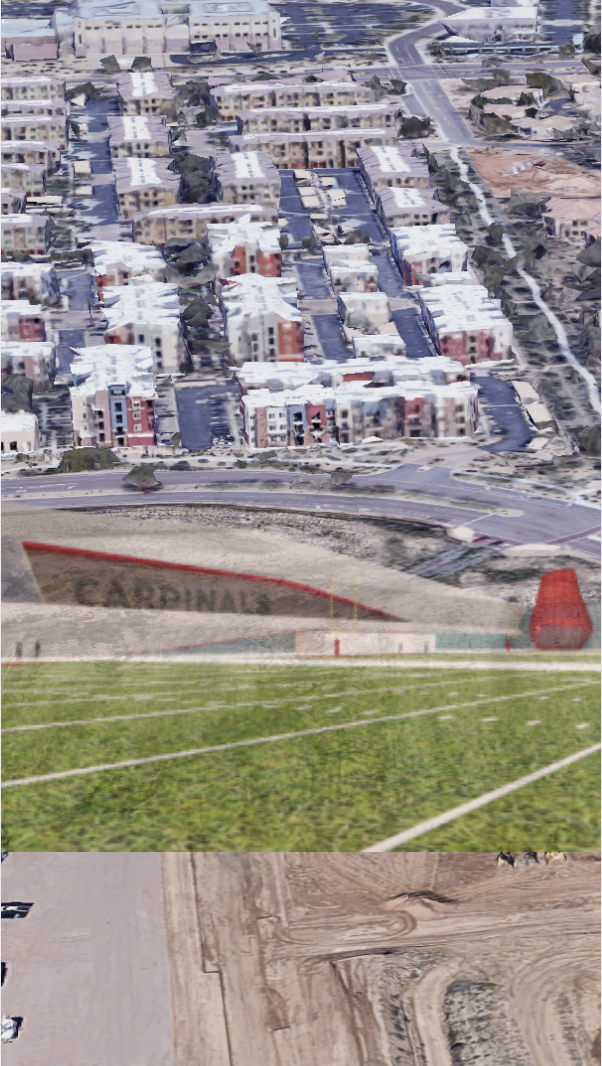 Arizona Cardinals’ $136 Million “Headquarters Alley” Project: How a 217-Acre Deal Will Redefine North Phoenix by 2028
 Public Safety as an Asset Class: The New Scottsdale AdvantageIn today’s Smart City economy, safety isn’t simply about peace of mind—it’s becoming a measurable, marketable asset class. Scottsdale is proving that public safety can be engineered into the fabric of
Nice to meet you! I’m Katrina Golikova, and I believe you landed here for a reason.
I help my clients to reach their real estate goals through thriving creative solutions and love to share my knowledge.