Chandler has reached 88% build-out capacity, Gilbert 82%, and Mesa 76%, with August 2025 records showing a 7% year-to-date decline in residential building permits. This signals a shift toward strategic infill projects and adaptive reuse, such as Chandler’s repurposing of vacant retail centers into mixed-use hubs. For wealth portfolios, this reduces reliance on raw land appreciation and emphasizes redevelopment premiums. Tax considerations include recalibrated valuations from adaptive reuses that may alter depreciation schedules. Arizona’s HB2110 on accessory dwelling units is expected to influence smaller-lot redevelopment viability. Long-term stability in these cities is supported by job diversity and strong demographic inflows, while smart-city initiatives, such as Gilbert’s expansion of fiber-optic broadband, support sustainable community growth.

Sierra Vista’s Tribute masterplanned community is expanding its executive housing phase, targeting high-ranking military personnel and defense contractors. The development features 5G-ready infrastructure and solar-ready lot configurations, aligning with federal energy goals for military-adjacent communities. Tax-wise, Sierra Vista offers significant homestead exemptions and stable mill rates, providing a predictable environment for long-term investors. Regulatory support from the City of Sierra Vista includes "Fast-Track" utility hookups for energy-efficient homes. Smart-city initiatives, such as digital-permitting and smart-metering, are being fully integrated into the Tribute masterplan to enhance administrative efficiency and resident satisfaction.
Mesa’s masterplanned communities, notably Eastmark and Cadence, recorded over 1,200 closings in the past year, reflecting strong demand for amenitized living. Recent data shows a 5% increase in home values within these communities, outperforming traditional subdivisions. Wealth managers highlight the stability of Mesa’s tax environment and the city’s commitment to tech-driven infrastructure. Regulatory policies support renewable energy integration and smart-grid development, enhancing the resilience of residential assets. Mesa’s focus on diverse housing types within masterplans ensures broad market appeal and long-term liquidity.
Paradise Valley’s luxury market closed August 2025 with a $4.15 million median, flat year-over-year, while Scottsdale stood at $1.25 million, with a 2% increase. Contracts in the $3–5 million segment were up 14% year-to-date, underscoring sustained ultra-luxury demand, while new listings priced above $2 million increased 11% compared to the same period last year. These properties represent significant wealth diversification vehicles, though taxable valuations place higher obligations on owners under Maricopa Assessor schedules. Regulatory clarity from SB1181 on listing agreements adds transparency to high-value transactions. Long-term value is reinforced by Scottsdale’s 85% build-out ratio, which restricts future land supply, while sustainability mandates in design review, including energy efficiency and water-smart landscaping, bolster asset resilience against climate stressors.
CoStar reports El Mirage industrial vacancy dropped to 3% in Q2 2025 amid strong demand for small-bay manufacturing. Triple-net leases attract regional private equity buyers. City tax incentives target industrial job creation. Zoning streamlining accelerates tenant improvements. Buildings meet Energy Star standards and utilize solar-ready rooftops.
Anthem is seeing a rise in commercial construction, with several new retail and medical offices currently under review. These projects are part of the community’s broader effort to enhance self-sufficiency and resident services. The Anthem Community Council’s focus on maintaining high standards for new construction supports long-term property values. Tax assessments remain stable, and the community’s governance model provides a predictable environment for homeowners and investors.
Governor Hobbs signed legislation in mid‑2025 allowing the sale of agricultural water rights to housing developers in rapidly growing areas such as Buckeye and Queen Creek, bypassing previous groundwater moratoria and unlocking new subdivision expansion. From a wealth‑management standpoint, this opens capital‑intensive, land‑adjacent development opportunities—but introduces water‑security risk in long‑term holding models. The regulatory shift reflects intentional policy to facilitate suburban expansion, though critics deem it insufficient for drought mitigation. Smart‑city advocates are watching how new clusters incorporate water‑efficient design, reclaimed water systems, or LEED‑style site certification. Over time, these water‑driven legislative changes may influence property‑value stability in high‑growth corridors.
Florence’s masterplanned Anthem at Merrill Ranch, originally developed by Pulte/Del Webb, is now entering a new phase emphasizing wellness and age-in-place design. Over 300 lots are currently under review for entitlement, with homes starting in the low $400,000s. Pinal County’s infrastructure expansion and hospital zoning approvals lend additional weight to its long-term livability profile. For legacy investors, Florence’s planned unit development (PUD) status streamlines estate planning and reduces bureaucratic drag in conveyance. Solar-ready rooftops and xeriscape standards reinforce eco-efficiency credentials.


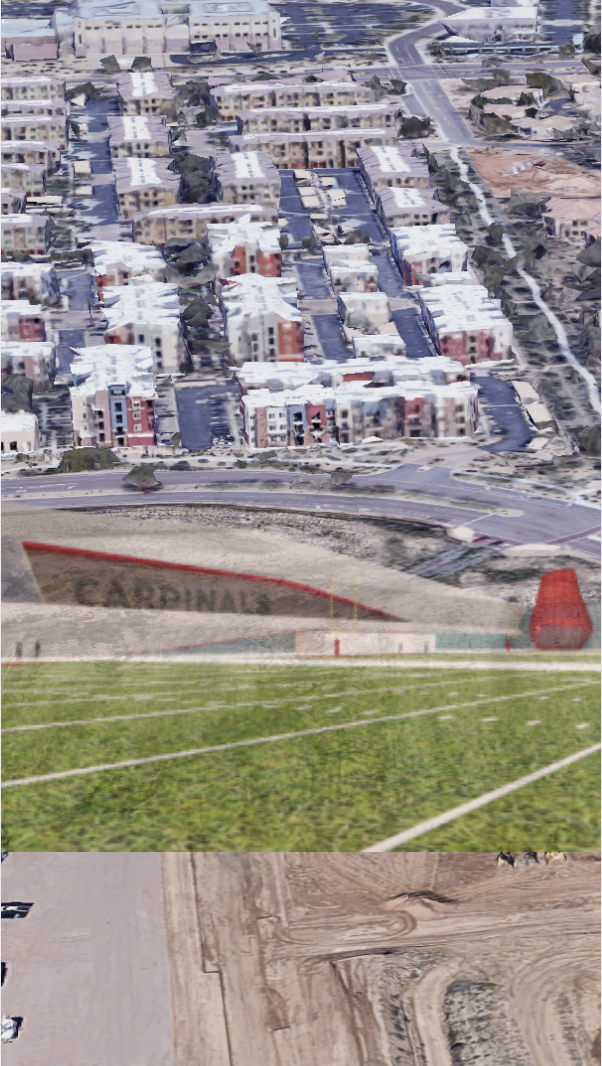 Arizona Cardinals’ $136 Million “Headquarters Alley” Project: How a 217-Acre Deal Will Redefine North Phoenix by 2028
 Public Safety as an Asset Class: The New Scottsdale AdvantageIn today’s Smart City economy, safety isn’t simply about peace of mind—it’s becoming a measurable, marketable asset class. Scottsdale is proving that public safety can be engineered into the fabric of
 How To Passively Grow Equity With A New-Build Home—Without Sacrificing Lifestyle Or Peace Of MindIn today’s housing market, timing and strategy often feel like everything. With construction cranes rising across places like North Scottsdale, Queen Creek, Goodyear, and Surprise, many buyers are
 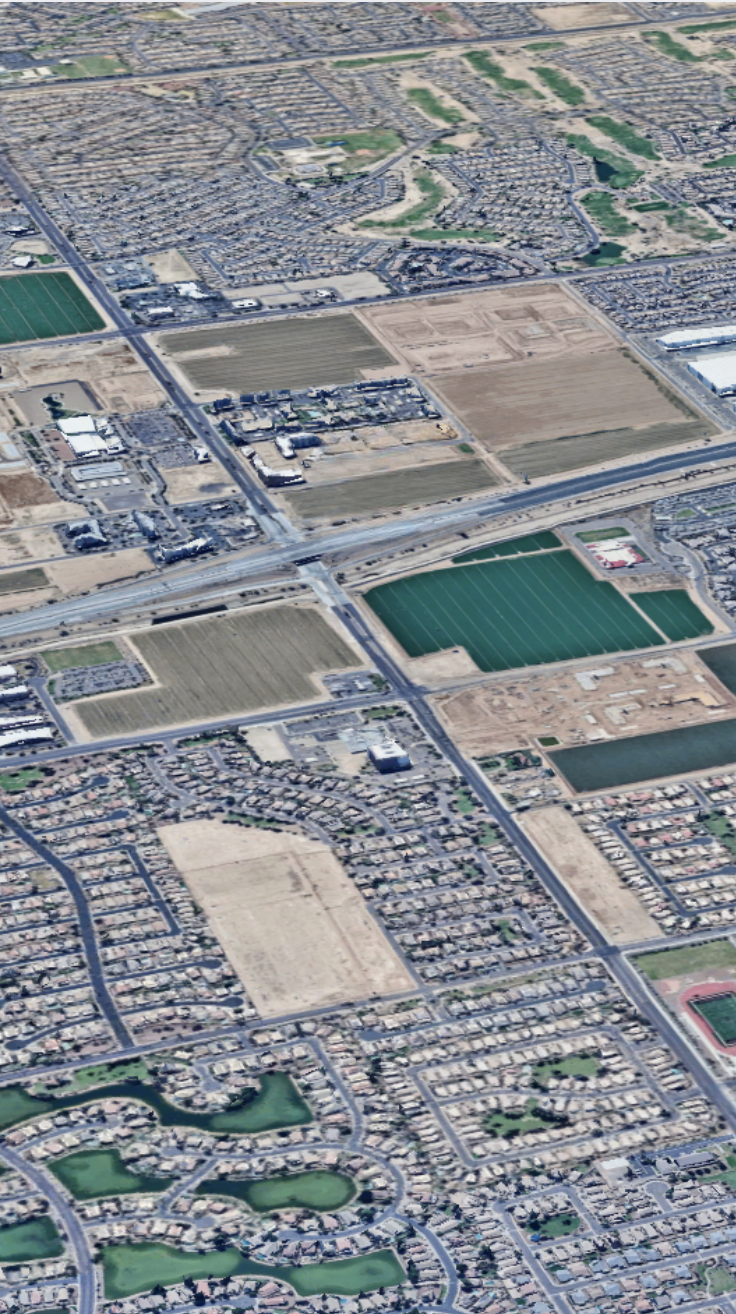 Avondale Tech Center: How the 117th Avenue & Corporate Drive Business Park Is Shaping the Future of Jobs, Housing, and Smart Growth in Arizona’s West ValleyThe 38-net-acre site at the north-west corner of Corporate Drive and 117th Avenue in Avondale, Arizona, situated just south of the Interstate 10 (I-10) and adjacent to key logistics corridors in the
 Nice to meet you! I’m Katrina Golikova, and I believe you landed here for a reason.
I help my clients to reach their real estate goals through thriving creative solutions and love to share my knowledge.