Within smart-city discourse and proptech circles, digital twins are evolving from novelty to near necessity. These virtual replicas of physical assets—fed by IoT sensors, performance data, and simulations—allow continuous monitoring, diagnostics, and scenario planning for buildings and neighborhoods.
In real estate, that means every home (or complex) could eventually have a “living digital twin” — a dynamic model that tracks energy flows, thermal behavior, structural health, indoor air quality, occupancy patterns, and even predictive maintenance alerts.
Parallel with that, energy efficiency is already creeping into how buyers and appraisers value properties. In Arizona, homes with solar systems tend to sell at a premium — studies show roughly a 4 % uplift over comparable non-solar homes in many markets. More broadly, energy-efficient homes (better insulation, high performance windows, efficient HVAC, smart controls) deliver lower utility bills and greater comfort — attributes that will become near-mandatory selling points.
As local jurisdictions tighten building codes, require disclosures or performance certifications, or even tie property taxes or incentives to energy metrics, these drivers will further embed efficiency as a core valuation axis.
Thus, over the coming decade, we’ll likely see market segmentation shift — not just by location, size, or architectural style, but by the digital & energy performance class of the home.
These are new builds or deeply retrofitted structures whose digital twin is fully operational, continuously reporting metrics, enabling active optimization (HVAC, shading, predictive maintenance). Homes in this class will command a premium, akin to “LEED Platinum + real-time performance guarantee.” Buyers will treat them like low-operating-cost assets.
Over time, this class becomes the new baseline for aspirational housing in smart corridors or next-gen suburbs (think parts of north Phoenix, downtown Scottsdale, Tempe’s innovation districts).
These are existing homes (some built pre-2000) that undergo moderate retrofits: better insulation, smart thermostats, solar + battery, window upgrades, perhaps partial sensor and monitoring systems. Their digital twin is deployed but may start with coarse metrics, then evolve. They may not hit “self-optimizing” levels, but they offer far better performance than the average home stock.
This tier will appeal to buyers who seek a mix of value, cost efficiency, and lower risk — essentially a bridge segment between legacy homes and fully modern ones.
Homes built before 2000 that retain original thermal envelopes, dated HVAC systems, minimal energy upgrades. Their digital twins, if installed, may only provide basic diagnostics (e.g. temperature, usage) but without deep data or controls. Some will resist retrofit due to structural constraints or cost.
These will increasingly be seen as higher-risk assets in markets where buyers and lenders demand transparency. They may trade at a discount relative to energy-upgraded peers, and in less desirable locations they may see slower demand growth.
Over time, some may become niche options (affordable housing, renovation projects, historic character homes), but their relative value trajectory will depend heavily on upgrade potential and cost.

In Greater Phoenix, several local real estate and sustainability firms are already positioning around green premiums and performance disclosures. For example, in Scottsdale / Paradise Valley, high-end listings increasingly highlight solar installations, insulation upgrades, and energy audits in marketing materials.
Remodeling firms around Phoenix—Tempe, Mesa, Chandler—are offering “energy makeovers” as a class of service, bundling envelope upgrades, smart systems, and performance warranties. Some are working with local utility rebates and incentive programs.
On the regulatory side, jurisdictions like Phoenix, Glendale or Tempe may begin to require energy disclosure forms or standardized performance data upon sale (similar to some California or European practices). Local building code experts and green certification consultants see pressure coming to integrate performance into permitting.
Architects and engineers in Arizona are exploring how to retrofit older tract homes (1960s-1980s) with hybrid systems, solar + battery + dynamic shading, while preserving character. Some developers in North Scottsdale and the Salt River corridor are spec’ing homes with embedded sensor networks, ready for a digital twin from day one.
These voices see the next decade as a pivot point: green premium homes won’t just be desirable, they will become baseline expectation in many corridors.
If you are an owner, investor, or advisor with legacy (pre-2000) properties, here are strategic orientations to consider:
Begin with energy audits and modeling. Before committing to retrofit spend, simulate via a digital twin what performance gains you can realistically achieve. Use that delta to benchmark your upgrade path.
Prioritize “deep retrofit” interventions (attic insulation, duct sealing, glazing, air sealing) over cosmetic upgrades. These are foundation upgrades whose returns compound over time.
Phase in sensor & monitoring infrastructure even before full retrofit. Install basic metering, temperature/humidity sensors, occupancy sensors — so that when you upgrade, the data baseline is present.
Bundle energy performance enhancements into financing or capital improvements. Some jurisdictions may allow tax assessments tied to home improvements, or low-interest green financing.
In marketing and sale, leverage transparency. Use the digital twin data or performance certificates to signal lower risk, operating cost, and higher comfort. Provide prospective buyers with energy projections and confidence.
In neighborhoods with unfolding green or smart infrastructure (microgrids, EV charging hubs, district energy), focus retrofit and acquisition efforts there — because the uplift premium will concentrate in those corridors.
By positioning early and investing in performance / transparency, pre-2000 homes can avoid being marginalized — they can become competitive players in the upgraded housing stock.
In ten years, the residential market will likely be stratified not only by location and finishes, but increasingly by digital twin maturity and energy performance class. Homes that integrate sensor networks, predictive models, and optimized energy operation will command higher valuations and lower buyer friction. Pre-2000 homes will face a bifurcation: those with upgrade potential and willingness to retrofit will ascend toward the Tier B / mid-performance class, while those left untouched risk relative stagnation or discounting.
Of course, many variables remain — energy prices, regulatory mandates, subsidy regimes, consumer preferences, and the speed of digital twin deployment. This is not a deterministic outcome but a directional shift.
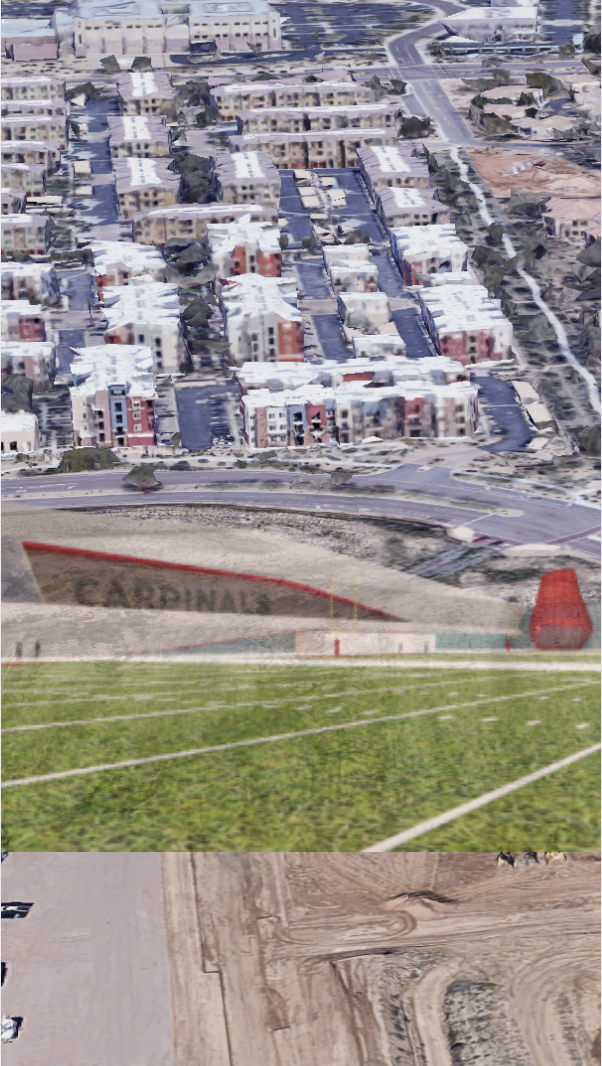 Arizona Cardinals’ $136 Million “Headquarters Alley” Project: How a 217-Acre Deal Will Redefine North Phoenix by 2028
 Exploring Arizona’s Unique Land Ownership Laws: What Every Future Homeowner, Investor, And Relocating Professional Needs To Know

 Public Safety as an Asset Class: The New Scottsdale AdvantageIn today’s Smart City economy, safety isn’t simply about peace of mind—it’s becoming a measurable, marketable asset class. Scottsdale is proving that public safety can be engineered into the fabric of
Nice to meet you! I’m Katrina Golikova, and I believe you landed here for a reason.
I help my clients to reach their real estate goals through thriving creative solutions and love to share my knowledge.